Retail denial: Why automotive strategies are dying in the showroom

Retail denial: Why automotive strategies are dying in the showroom

Automotive retail is currently suffering from a dangerous disconnect. While many head offices are moving away from a single sales model in favor of flexible hybrid arrangements, a new gap is opening between strategy and reality.

These hybrid models are designed to find a perfect balance: OEMs can act as agents for high-value products to maintain brand control, while dealers keep their independence in other areas to stay responsive to their local markets. It sounds like the perfect compromise, but the execution is falling further behind. We are seeing an industry-wide “denial gap,” where the sheer complexity of managing these blended roles is quietly suffocating the very transformations designed to save the network.

We launched our nine-week Sales and Revenue Transformation campaign to move beyond theoretical discussions and uncover where the commercial journey is actually breaking down. By examining the transition to these new hybrid models and the resulting pressure points in retail and service, we aimed to identify the practical barriers that prevent MSX clients – both OEMs and dealer groups – from recovering lost revenue.

The feedback from over 500 automotive specialists, retail leaders, and commercial experts who participated in our research was clear: the industry doesn’t have a strategy problem. It has an execution crisis.

Across the campaign, the findings pointed to the same underlying issue. 47% of respondents identified consistent execution as the hardest part of managing a consolidating dealer network, while 52% said rules interpretation creates the greatest risk in complex incentive programs. In both cases, the challenge is clear: strategy only delivers value when people across the network can understand it, apply it, and act on it consistently.

Graph showing 47% struggle with consistent execution in automotive retail.

This is the point where high-level strategy often meets a dead end. A transformation only matters if it changes what happens between a salesperson and a customer, or a service advisor and a vehicle owner. If it doesn’t scale consistently across every market and every touchpoint, it isn’t transformation – it’s just paperwork.

Changing the sales model won’t fix a visibility problem

The industry is racing toward agency and hybrid models in search of control. But control requires clarity. Our research found that role clarity and network visibility were the primary concerns for 32% of respondents in these new models.

Graph showing 32% of respondents cite role clarity and network visibility concerns.
If a dealer doesn’t know where their responsibility ends and the OEM’s begins, the customer will be the first to find out. MSX CX Consultancy helps brands bridge this gap by redesigning journeys that actually function in a multi-channel world. To protect conversion at the digital stage, solutions like MSX E.COM Personal Landing Pages and MSX Consumer Engagement Solutions ensure that the customer doesn’t fall through the cracks of a disconnected handoff.

Scale is currently the enemy of consistency

As dealer groups consolidate, they gain massive scale – but they often lose grip on the “how.” When nearly half of the industry says consistency is their biggest headache, it proves that “bigger” isn’t “better” without a way to steer the ship.

You cannot manage a global network through a rear-view mirror. MSX ENGAGE provides the alignment necessary to keep large groups moving in unison, while APPRAISO turns static compliance into dynamic performance steering. If you can’t see the gap, you can’t close it.

Incentive complexity is an execution problem

Incentive schemes only steer behavior if the network understands them. Our research found that 52% of respondents identify rules interpretation as the greatest risk in complex programs, far outweighing concerns over audit readiness.

When rules are open to interpretation, inconsistency quickly erodes claims accuracy and partner trust. MSX Sales Incentive Audit program can support automotive brands in strengthening the governance, clarity, and audit trail behind incentive programs, helping ensure commercial activity is measured and rewarded with greater confidence.

Aftersales is where your revenue is leaking

While the industry obsesses over the “new car” sales model, the largest profit pool – aftersales – is under-managed. 34% of respondents identified service booking as the number one source of revenue leakage, outranking online leads and showroom follow-ups.

Graph showing 34% revenue leakage from service booking in automotive industry.

We are seeing a market where customers prioritize speed and ease over brand loyalty. If your booking journey is a barrier, your revenue is already gone. In the article Is convenience killing the automotive service industry?, we highlight that convenience is the new currency. MSX Mobile Service is a direct response to this, reclaiming capacity and utilization by meeting the customer where they are, rather than waiting for them to show up.

Data is noise if it doesn’t drive coaching

We are drowning in data but starving for insight. 30% of professionals told us that coaching impact and service performance are their biggest blind spots.

As we explored in Is the traditional KPI dead?, reporting what happened last month is no longer a management strategy. MSX Sales Performance uses diagnostics to uncover the why behind the numbers, ensuring that every intervention is targeted and measurable.

Stop training, start coaching

Perhaps the most telling finding was that 34% of respondents blame inconsistent coaching for stalling sales improvement, while 29% cited low adoption.

Graph showing coaching and adoption gap in automotive sales strategies.
The traditional “classroom” approach to retail improvement is failing. Change only happens when it is reinforced locally and daily. MSX COACH and our wider Learning Solutions move capability building out of the HR department and into the showroom flow, ensuring that strategy actually translates into behavior.

High stakes for high performance

The automotive retail landscape is being rebuilt. Whether the resulting structure is profitable or simply more complex depends entirely on your ability to close the gap between what you say you will do and what your network actually delivers. Transformation should not be a pilot program that never reaches scale; it should be the standard.

Your strategy is only as good as its last mile. If your transformation isn’t reaching the showroom floor, it isn’t delivering value.

Don’t let your strategy stall at the showroom door. Contact MSX to discuss how we can help you bridge the gap between strategy and a high-performing network.

Related Articles

The profit lifecycle: Where automotive profit is really won

The profit lifecycle: Where automotive profit is really won

Stop looking for profit in the wrong places. Profit is often viewed as the result of financial performance. It appears in margin reports, return on sales figures, aftersales revenue, and year-end results. Those measures matter, but they only tell part of the story. They show the outcome, not how it was achieved.

The reality is that profit is created, protected, and sometimes lost long before it appears on a financial statement. It starts when a vehicle enters the market and continues through every customer interaction, service visit, repair, recall, and operational decision that follows.

Between market entry and aftersales, the sales journey also plays a critical role in profitability. Solutions such as E.COM Personal Landing Pages and APPRAISO help brands strengthen customer engagement, support retailer performance, and create value from the moment a vehicle becomes available.

The organizations that consistently outperform their competitors understand that profitability is not owned by one department. It is influenced by how effectively the entire business works together. Faster market entry. Better repair quality. Reduced vehicle downtime. Smarter customer engagement. More efficient recalls. Stronger technical support. These may be viewed as separate activities, but each plays a role in shaping commercial outcomes. The most successful automotive businesses are beginning to connect these dots. They are shifting their focus from measuring profit at the end of the journey to understanding how value is created at every stage of it. Because in today’s automotive industry, profit doesn’t simply appear in the numbers. It follows the vehicle. It begins before the vehicle reaches the customer.

Homologation is often treated as a compliance task. In reality, it affects launch timing, internal coordination, retailer readiness, and time to market. When approvals move smoothly and documentation is well managed, businesses protect commercial momentum. When they do not, delay becomes cost. That is one reason MSX Homologation Services matter from a profitability point of view, not only a regulatory one

Once the vehicle is in market, profit becomes even more operational.

A sale creates revenue. The ownership journey determines how much value is retained and grown. Service access, technical accuracy, convenience, recall execution, and customer communication all shape whether a customer stays loyal and whether the network runs efficiently. This is where many organizations still underestimate margin loss.

In Is convenience killing the automotive service industry?, MSX highlighted something the industry is feeling every day: convenience has become a real driver of customer retention. If customers cannot book quickly, get clear updates, or access flexible service options, the cost is not only dissatisfaction. It is missed revenue, weaker retention, and lower lifetime value.

Customer engagement shows the same pattern. A leading automotive brand improved call conversion by 18% and achieved a further 6% conversion uplift through WhatsApp by moving from static outreach to real-time, needs-based contact. Better timing. Better relevance. Better results. Read the full story  .

Inside the workshop, profit is shaped by speed and clarity.

When technicians spend too long searching for repair information, or support teams are buried in repeat queries, productivity falls and downtime rises. In validation work with a leading multinational manufacturer, the MSX AI Virtual Assistant reduced support tickets by 30% and improved response times by 15% by helping technicians access technical service bulletins, repair manuals, and diagnostic trouble codes faster. That is operational efficiency with a direct commercial effect.

Repair quality is another area where workshop performance shapes profitability in ways that are easy to overlook. Repeat repairs, inconsistent diagnosis, and poor repair order discipline all create cost: rework, warranty exposure, customer dissatisfaction, and avoidable operational expense. MSX Repair Quality Support addresses this through a structured, data-led program that helps OEMs and dealer networks improve first-time fix rates (FTFR), standardize repair execution, and prioritize intervention where it has the greatest impact. The results are measurable: up to a 5% improvement in first-time fix and up to a 20% productivity increase across the network.
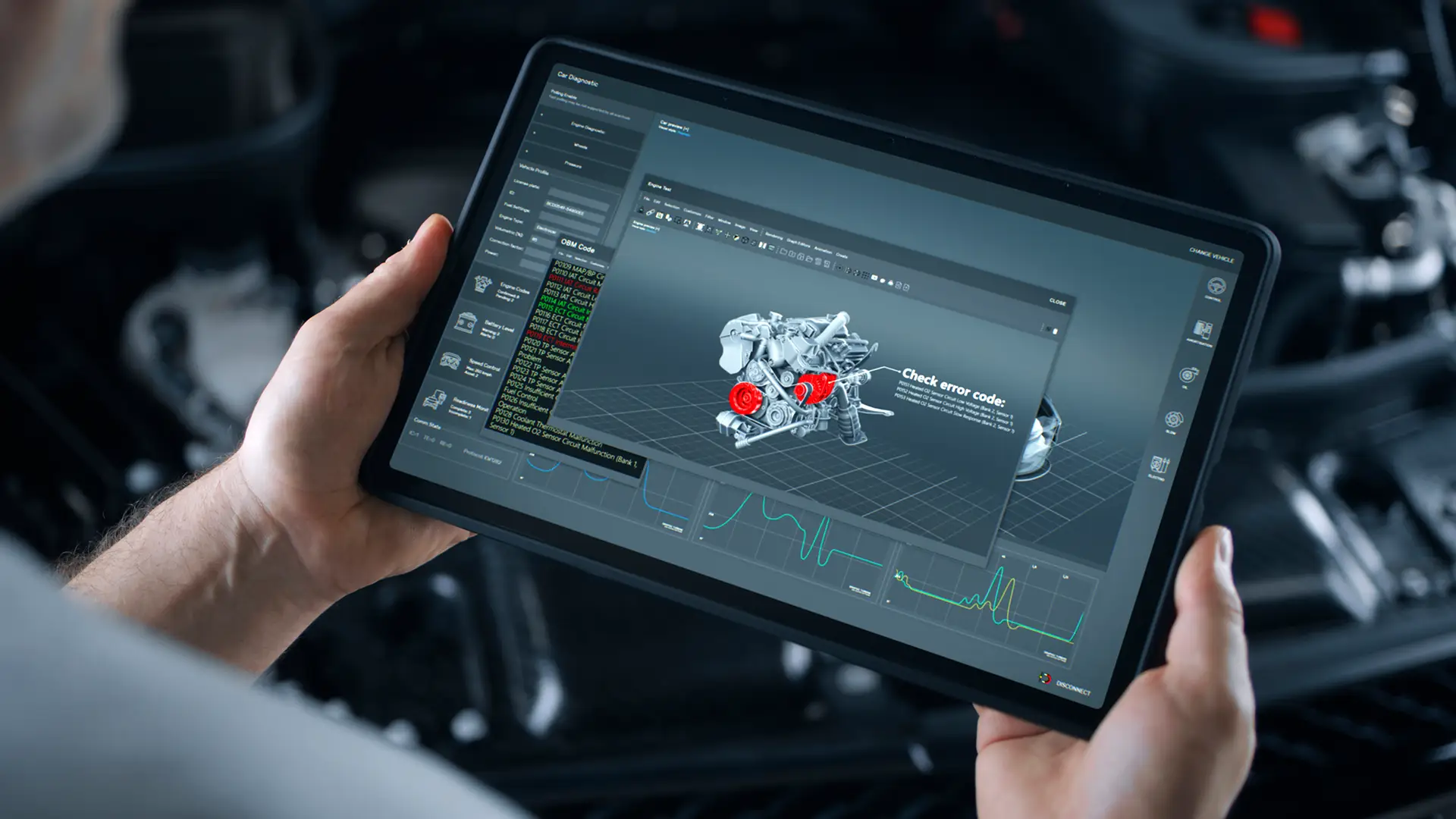
The same is true for technical content. Documentation often sits in the background, but slow publishing cycles and fragmented authoring processes create friction across the network. pubFoundry helps improve content flow, consistency, and speed, which supports better service performance and more efficient knowledge sharing.

A wider shift is happening here too.

This shift is changing how automotive businesses think about performance. In Beyond the numbers and Is the traditional KPI dead?, MSX explored why historical KPIs alone are no longer enough. Organizations need better context, better prediction, and a clearer understanding of what is driving performance – not just what has already happened.

That shift matters because profit is easier to protect when organizations can see problems early and act before cost becomes visible.

Profit is easiest to lose when complexity increases.

Recalls also deserve a place in the profit conversation. Poorly managed recalls do more than add cost. They put pressure on capacity, frustrate customers, and weaken trust. MSX Recall Management helps coordinate scheduling, capacity, and customer contact so that recalls are completed more efficiently and with less disruption. For fleet operators and mobility providers, lifecycle risk makes the point even more clearly. In this customer success story: Increasing fleet reliability, MSX showed how a preventative maintenance model could help a logistics operator avoid up to $13 million in annual spend. That is what happens when data is used early enough to protect value before cost becomes visible.

So where is profit really created?

Across all of these examples, the message is consistent: Profit is shaped through operational decisions, customer experience, service efficiency, compliance readiness, technical support, and lifecycle management.

In other words, profit follows the vehicle. The organizations that understand the profit lifecycle will be better positioned to identify hidden margin loss, strengthen customer loyalty, and create sustainable performance at every stage of the journey.

The question is not whether profit is being won or lost. The question is where.

Which stage of the vehicle lifecycle has the greatest impact on profitability in your organization? Connect with us to continue the discussion.

Related Articles

The data cycle: Where insights drive actions, and actions fuel insights

The data cycle: Where insights drive actions, and actions fuel insights

Field operations are one of MSX’s most influential capabilities because transformation happens where customers interact with your brand. Every year, we visit and coach thousands of retail locations, and that number continues to grow. These engagements are not routine checks, but strategic interventions designed to elevate performance, customer experience, and profitability.

OEMs recognize the value of this service because, in today’s highly analytical era, success demands more than intuition. It requires rigorous evaluation, actionable insights, and alignment with evolving customer expectations. Field operations bridge the gap between strategy and execution, ensuring every recommendation is grounded in evidence and tailored to real-world conditions.

Analytical practices have matured and so have the tools behind them. Advances in data engineering, governance, cataloguing, and generative AI have redefined what’s possible. These capabilities allow us to move beyond static reporting to dynamic, predictive insights – delivering multiple KPIs and repeatable, high-quality analysis at speed. We can now identify which operational practices drive measurable improvements in customer satisfaction and replicate those successes across entire networks.

Redefining value

Calculating the ROI of field programs has always been complex. At MSX, we’re committed to solving that challenge with transparency and precision. Our ambition is to transition every field operations program to a pay-for-performance model – a bold move that aligns our success with yours. By linking compensation to measurable outcomes, we reduce risk for OEMs, demonstrate accountability, and prove the value of every intervention with data-driven evidence.

Precision in practice

One of the biggest hurdles in measuring program impact occurs when participants are not selected at random. This can make results misleading, as differences may stem from factors like size, location, or experience rather than the program itself. A simple A/B test often falls short in these cases. However, when control and treatment groups are randomized, A/B testing becomes a powerful methodology – enabling us to uncover and validate cause-and-effect relationships between variables and their impact on business performance. This creates a precise benchmark for informed business discussions.

Beyond single experiments, our technical capabilities allow us to run multiple tests simultaneously, optimizing operational practices and recommendations in real time.


Your data is just the starting point. We enrich it with hundreds of additional datasets from internal sources and world-class partners to give you a panoramic view of performance. This expanded dataset enables broader benchmarking so you can see how your network compares internally and against industry leaders. It positions your success in the context of competitive standards, helping you identify where you outperform and where improvement is needed.

By combining your operational KPIs with regional market data, we can pinpoint which service practices deliver the highest customer satisfaction in similar markets. Accuracy ensures these insights are based on validated, reliable data, while transparency means you understand the methodology behind every recommendation. This clarity empowers you to make strategic decisions with confidence – whether that’s reallocating resources to high-performing regions, refining training programs, or introducing new customer experience initiatives.

Unearthing the full picture

The numbers tell part of the story – but not all of it. While quantitative data reveals trends and performance metrics, qualitative insights uncover the “why” behind those patterns. Our tools integrate both dimensions seamlessly. By applying propensity score matching – a method that creates fair comparisons by matching entities with similar characteristics – we eliminate bias and ensure evaluations reflect true impact. This means you’re not just comparing dealerships by size or geography – you’re benchmarking performance against peers with similar operational realities.

At the most granular level, we track practice adoption and assess implementation quality. This allows us to answer critical questions: Are the recommended processes being followed? How effectively are they executed? These insights highlight gaps that raw numbers can’t capture, such as cultural barriers or training needs that influence outcomes.

Turning insight into action

Empowering our field teams is fundamental to driving transformation. We equip them with actionable data and encourage critical thinking, enabling them to interpret insights rather than simply report them. This blend of quantitative evidence and qualitative context ensures recommendations are not only statistically significant but also practical and tailored to real-world conditions.

A data model might show that a specific service process improves customer satisfaction scores. But qualitative feedback from the field could reveal that adoption is slow due to resource constraints. By combining these perspectives, we design interventions that are both effective and feasible – whether that means adjusting training programs, reallocating resources, or refining operational guidelines. This integrated approach turns field teams into strategic partners, capable of influencing outcomes and shaping best practices across the network.

The road ahead is complex, but MSX has the expertise to navigate it. We’ve iterated across multiple OEM datasets, refining our approach to causal analysis and preparing for rollout at scale. Our internal data capabilities are evolving to meet – and exceed – the challenges facing mobility players today.

If you’re ready to turn data into a competitive advantage and transform your field operations into a performance-driven engine, let’s start the conversation.

Connect with MSX today and discover how we can help you lead the future of mobility.

Contact the Author

Felipe_Cruz

Felipe Cuz

Global Solutions Leader, Actionable Insights

Felipe_Cruz

Felipe Cruz

Global Solutions Leader, Actionable Insights

Related Articles

The repair experience gap: How workshop quality builds or breaks loyalty

The repair experience gap: How workshop quality builds or breaks loyalty

In a market where automotive brands race to innovate, the most defining moments in the customer relationship still happen in the workshop.

Research shows that consumers spend three times more time interacting with service and repair processes than they do buying a vehicle, making the service process crucially important from a customer experience perspective. Yet one in three will leave a brand they previously trusted after a single poor experience, sending a clear message: aftersales performance is one of the strongest drivers of long-term loyalty.

The invisible moments that shape brand perception

Automotive organizations invest heavily in product development and customer engagement, but the daily interactions that influence customer trust often unfold far from the boardroom – at morning drop-off, during parts shortages, or when diagnostics stall.

These touchpoints are where brand promise meets real customer experience. When customers worry about repair accuracy, lead time or transparency, they’re not evaluating an isolated service event. They’re reassessing their confidence in the brand itself. These impressions build over time and have lasting impact.

If the workshop plays such a critical role, why is it still seen as a support function instead of a strategic opportunity?

The process gap: Where capability meets friction

Workshop challenges do not come from a single root cause. In some markets more than others, dealers are managing high employee turnover, with newer technicians entering the workshop with limited hands-on experience. In these environments, technical capability and access to effective training are genuine constraints that directly affect repair quality.

At the same time, even well-trained technicians often struggle to deliver consistent outcomes when processes fail to support them. The most common breakdowns occur where people, information and workflows are poorly connected, creating friction that undermines both efficiency and customer confidence.

A typical negative service experience often includes:

These failures are fixable. But they require stronger process intelligence, clearer accountability and better alignment between technical training, operational workflows and customer-facing communication. When workshops are equipped with both the right skills and the right processes, technicians can focus on repair accuracy, advisors can manage expectations confidently, and customers experience consistency they can trust.

A smarter model for workshop excellence

Field work is unpredictable. Managing high-priority escalations requires a structure that prioritizes agility. MSX supports this through coordinated deployment models and clear escalation pathways embedded within OEM workflows.

Crucially, our engineers have a deep understanding of how cases develop and the impact they have on your business. They can quickly identify when a technical fix might not be the best approach and when a wider commercial strategy is needed. This forward-thinking approach facilitates early risk mitigation, protecting your relationship with customers and reaching a positive result before a situation becomes too difficult to resolve.

MSX’s Repair Quality Excellence program is built on three core principles:

Performance-based segmentation

Key KPIs help us group dealers into tailored support tiers, respecting dealer context and ensuring support is meaningful, not disruptive. High performers act as benchmarks, sharing best practices. Mid-tier dealers benefit from focused virtual coaching that addresses specific process challenges. Lower-performing, high-volume dealers receive in-depth on-site support and customized improvement roadmaps.

Process diagnostics, not symptom treatment

Lagging indicators like CSI scores reveal issues only after customers are impacted. We prioritize early detection of process breakdowns. Why does one dealer hold repair orders for 15 days while another completes them in three? Why are parts unfilled? Or why do some technicians require more technical assistance than others? These patterns point to systemic issues that can be measured and resolved before they affect customers.

Hybrid engagement models

With the right analytics, field support becomes more precise and effective. Helping one OEM with its dealer network, MSX reduced travel costs by over $500,000 a year while increasing dealer contacts by 20%. Virtual coaching manages routine needs. On-site support is reserved for complex, high-impact cases. This model strengthens efficiency, responsiveness and network-wide performance.

The metrics that matter

When the workshop is recognized as a driver of customer experience, the KPIs expand beyond cost containment. The impact includes:

Improved first-time fix rates

Dealers in MSX programs achieve 2.5–5% gains, reducing repeat repairs.

Faster repair cycle times

Shorter lead times improve customer satisfaction and workshop throughput.

High dealer satisfaction

Specialists consistently achieve 9.5/10 ratings, reflecting a partnership approach.

System-wide learning

Insights from dealers inform policy, process improvements and even product quality.

These outcomes create tangible competitive advantage in a market where loyalty is increasingly fragile.

Workshop excellence as a strategic differentiator​

As the industry moves across supply chain instability, software-defined vehicles and evolving sales models, product differences are narrowing. What increasingly sets brands apart is the ownership experience.

Workshop performance is central to that experience. It demands a shift in mindset – from treating aftersales as operational overhead to viewing it as a strategic capability that builds trust and loyalty. It requires proactive process optimization and recognition that customer perception of quality is shaped as much by service interactions as by vehicle engineering.

The decision for OEMs is no longer whether to invest in workshop-process improvement, but whether they can afford not to – especially when a single poor interaction can undo years of brand building.

Ready to explore how workshop excellence can strengthen your customer experience?

Contact the Author

Pasquale Aloi

Global Solution Leader, Warranty & Repair Efficiency

Pasquale_aloi.png

Pasquale Aloi

Global Solution Leader, Diagnostic & Repair Enhancement

Related Articles

Increasing fleet reliability: Real-world recommendations for preventative maintenance

Increasing fleet reliability: Real-world recommendations for preventative maintenance

Fast facts

Middle-mile logistics partner for a multinational e-commerce company

Faced with rising maintenance costs and inefficient scheduling as its vehicle warranties expired, our client needed a tailored preventative maintenance plan to reduce costs, extend vehicle lifespans, and improve reliability.

United States

MSX developed a data-driven risk modeling solution, using warranty data and survival analysis to create a preventative maintenance schedule. This approach aimed to reduce repair costs, extend vehicle lifespans, and improve reliability, potentially avoiding up to an additional $13 million in spend annually.

Addressing rising costs and inefficiency

The logistics partner for a multinational e-commerce company faced two key challenges as their fleet of vehicles approached the five-year mark – when warranties on many of their vehicles would expire:

  • Rising maintenance cost post-warranty

    During the first few years of vehicle ownership, our client’s costs were manageable, as major repairs were covered by manufacturer warranties. However, after four or five years, those warranties would no longer cover significant repairs, exposing them to potentially millions of dollars in additional maintenance expenses. With vehicles from several OEMs, they faced further complications. Maintenance and failure patterns varied across these OEMs, requiring tailored strategies for each.

  • Inefficient maintenance scheduling

    The existing maintenance schedule was insufficient for its needs. The schedule did not account for the rigorous demands placed on the fleet, leading to inefficiencies in downtime and suboptimal financial performance. In addition, our client lacked clear insights into the financial liabilities of extending vehicle lifespans and whether a more robust preventative maintenance program could mitigate risks and reduce costs.

In short, our logistics client needed a solution that could quantify the financial risk associated with maintaining its fleet post-warranty and propose a preventative maintenance plan that would extend vehicle lifespans, reduce downtime, and improve reliability, all while being cost-effective.

Insights for data-driven maintenance

We approached the client’s logistics team with a data-driven, advanced risk modeling solution that leveraged our expertise in the automotive sector and our ability to work with OEMs to obtain critical warranty data. The solution combined statistical techniques – specifically a reliability analysis – with practical recommendations for vehicle maintenance.

Step 1: Data collection

Our first step was to gather warranty data from the OEMs, which would allow us to understand the failure modes and maintenance requirements for each vehicle model in their fleet. We successfully negotiated with one OEM to provide warranty data not only for our client’s fleet vehicles but also for all similar model vehicles in its fleet, enriching our analysis. In the case of the second OEM, while direct data sharing wasn’t feasible, we leveraged a workaround by scraping the warranty data from its online vehicle information site, which allowed us to obtain the necessary details for its vehicles.

Step 2: Risk modeling

Using the warranty and maintenance data, we created a reliability model for each major vehicle component - such as the transmission, drivetrain, and electrical systems. We employed survival analysis to model the risk of failure for each component over time, allowing us to quantify the probability of failures at various mileage points. This modeling enabled us to predict how the risk of failure would evolve as vehicles aged, particularly after the expiration of their warranties.

Step 3: Preventative maintenance strategy

Once we had a clear understanding of the risks associated with each vehicle and component, we moved on to crafting a detailed preventative maintenance schedule. This schedule was designed to reduce the likelihood of costly, unplanned repairs by performing timely, cost-effective maintenance activities before failures occurred. Our approach considered the maintenance needs of 12-15 critical vehicle components for each OEM, proposing specific interventions (such as replacing batteries or servicing drivetrains) at optimized intervals.

Step 4: Financial analysis and impact simulation

Using the preventative maintenance schedule, we ran simulations to estimate the financial impact of the proposed activities. The goal was to quantify how much our client could save in terms of reduced downtime and repair costs. For example, we found that by implementing our preventative maintenance strategy for the drivetrain and transmission systems, they could avoid up to an additional $13 million in spend annually.

The key to our solution was that it not only helped our client optimize maintenance costs but also allowed the organization to plan for parts and services more effectively. By reducing unplanned downtime and minimizing the need for emergency repairs, it could maintain fleet reliability while cutting costs.

Benefits of a preventative maintenance model

While the full preventative maintenance strategy has not yet been implemented across the client’s entire fleet, the results from our model have already provided significant insights:

  • Cost savings

    By following our recommendations, the company could avoid up to an estimated $13 million in spend annually just by reducing the frequency and cost of major repairs in critical vehicle components.

  • Financial risk mitigation

    Our calculations indicated that without preventative measures, our client would face a 227% increase in repair costs once warranties expired. While this increase cannot be substantially reduced, our focus is on making this out-of-warranty jump as small as possible. Our preventative maintenance schedule provided a clear path to reducing these future liabilities.

  • Improved reliability

    The reliability modeling showed that implementing our maintenance schedule would significantly improve vehicle reliability, leading to less downtime and more efficient operations.

The foundation for long-term savings

As the program continues to evolve, MSX is exploring automation and AI to further streamline rule-based entries and validations. Early estimates suggest that these innovations could significantly reduce workloads for high-volume, low-complexity claims, freeing up dealer teams to focus on higher-value activities and further improving cycle times.

This project exemplifies the power of data-driven decision-making in fleet management. By combining advanced risk modeling and preventative maintenance strategies, we provided this organization with the tools to optimize its fleet maintenance, reduce operational costs, and enhance vehicle reliability. Although the full operational results are yet to be realized, the financial and strategic framework we’ve put in place gives the business a clear path to achieving long-term savings and efficiency gains.

Related case studies