Accessory Sales Reimagined: APIP unlocks 110% sales boost through structured modular implementation

Accessory Sales Reimagined: APIP unlocks 110% sales boost through structured modular implementation

Fast facts

Dealer network of a leading volume manufacturer

Accessory sales were hindered by fragmented departmental ownership, lack of incentives and training, and workshop capacity pressures, resulting in missed revenue opportunities and lost business to aftermarket providers.

UK

MSX Accessories Performance Improvement Program (APIP) transformed accessory sales into a structured, customer-focused strategy that delivered rapid performance gains, boosted revenue, and significantly improved dealership engagement and customer satisfaction.

Identifying the barriers to accessory sales growth

Accessories have traditionally been a neglected aspect of the vehicle sales process, often falling into the gaps between parts, service, and sales departments. In many dealerships, this meant that accessories were rarely discussed with customers, and sales teams lacked both the training and the incentive to promote them. For a leading volume vehicle manufacturer in the UK, this resulted in accessory sales being treated as an afterthought, despite the brand’s strong accessory portfolio and the clear potential to drive additional revenue and customer satisfaction.

The challenge was multifaceted. Ownership of accessory sales was fragmented across departments, leading to inconsistent processes and a lack of accountability. Sales teams were not confident in selling accessories, while parts departments operated in silos and service teams were preoccupied with warranty and recall work. This disconnect meant that valuable business was routinely lost to aftermarket providers, often simply because customers were unaware of the OEM-approved solutions available to them.

Compounding these issues were broader industry pressures. The manufacturer faced ongoing capacity constraints in workshops, driven by technician shortages and the need to prioritize warranty and recall work. As a result, finding new ways to grow customer-paid revenue became even more critical. Accessories, with their high margin potential and ability to enhance the ownership experience, represented a significant untapped opportunity.

Recognizing these challenges and the need for a more proactive approach, the manufacturer partnered with MSX to fundamentally transform the role of accessories within the sales journey. The goal was to shift accessories from a reactive, last-minute add-on to an integrated, strategic sales channel, unlocking new value for both the business and its customers.

Insight-led, performance-driven, and dealer-focused

To address these challenges, MSX and the manufacturer launched the Accessories Performance Improvement Program (APIP) across selected UK dealerships. The initiative was designed not only to boost accessory sales but to fundamentally reshape how accessories were perceived and sold within the dealership environment. By turning a traditionally reactive and fragmented process into a structured, customer-focused strategy, the program aimed to bridge departmental silos, empower sales teams, and unlock a new stream of customer-paid revenue. It also sought to relieve pressure on workshop capacity by shifting focus toward high-margin, easy-to-fit accessories that could be sold proactively at the point of vehicle purchase. The solution was built on three core pillars:

  • Strategic product focus

    Working closely with OEM stakeholders, MSX identified high-impact accessories – such as dash cams and protection packs – for targeted promotion. These products were chosen for their ease of fitment, customer appeal, and margin potential.

  • Data-driven dealer targeting

    Dealerships with low accessory sales-to-vehicle sales ratios were prioritized for the program. A comprehensive audit process, including mystery shopping, online presence reviews, and in-store observations, established a clear baseline for each dealership.

  • Structured on-site coaching

    MSX consultants conducted hands-on health checks, aligning parts, service, and sales teams around a unified accessory sales strategy. This included embedding accessories into the car deal conversation, removing accessories from used cars to enable resale and upsell opportunities, and implementing cross-departmental incentives to drive engagement.

Engaging dealer principals and department leads at an early stage of the implementation phase helped ensure buy-in, incentivizing sales teams, and integrating accessories into the standard sales script. Quick-win process tweaks – such as bundling accessories into finance offers – delivered immediate impact, while positioning accessories as value-added enhancements improved customer satisfaction. Performance was tracked through regular reviews and dashboards, ensuring transparency and continuous improvement.

Accelerating growth with purpose

The APIP Program delivered rapid and measurable results for the manufacturer and its dealer network. By embedding accessories into the sales conversation and aligning cross-functional teams around a shared strategy, dealerships were able to unlock previously untapped revenue streams and improve customer engagement. The program’s structured approach and practical coaching enabled dealers to implement changes quickly, with minimal disruption to existing workflows. This not only accelerated performance but also demonstrated the scalability of the model across different dealership profiles. Dealerships reported fast results, practical implementation, and high credibility of MSX consultants. The program successfully transformed accessory sales into a proactive profit center, delivering greater value and customization for customers, without adding pressure on workshop capacity.

Here’s how the program delivered measurable impact:

year-on-year increase in targeted
accessory pack sales
+ 0 %
year-on-year growth in promoted
products such as dash cams
+ 0 %
accessory sales growth in mature
program dealerships over three years
+ 0 %

Practical insight, lasting change

The program highlighted the importance of dealer engagement and cross-functional collaboration. Securing buy-in from dealer principals and aligning all departments were critical to success, while practical, hands-on coaching and quick-win process tweaks drove rapid adoption and results. Positioning accessories as personalization options not only boosted sales but also enhanced the customer experience.

Early pilots with luxury brands indicate even greater potential due to higher accessory value per vehicle, and the APIP model is well-positioned for broader rollout across markets and segments. Future enhancements may include digital tools for accessory visualization and further integration with finance offers.

In summary, MSX’s Accessories Performance Improvement Program unlocked significant untapped potential for the manufacturer’s UK dealer network. Through structured coaching, cross-functional collaboration, and a clear incentive model, the program transformed accessories from a neglected afterthought into a dynamic profit center, delivering measurable growth, enhanced customer value, and a blueprint for future expansion.

If you’d like to find out how MSX can transform accessory sales and unlock measurable growth for your business, get in touch today!

Related case studies

The $4 Billion Connected Services Gap: Why retail execution – not technology – is holding back your subscription revenue

The $4 Billion Connected Services Gap: Why retail execution – not technology – is holding back your subscription revenue

Fast facts

Global, top-5 automotive OEM

Despite significant investment in offering connected vehicle services, subscription uptake does not meet expectations. There is substantial potential to strengthen capabilities at retail to sell digital value at scale.

180 dealers across North America

MSX helped redesign the retail operating model, embedding digital subscriptions into the sales process, equipping frontline teams with datadriven tools and building a scalable system for long-term growth.

Turning a decade of missed opportunity into tenfold ROI

For years, connected vehicle subscriptions have been treated as a product challenge: build the features, and adoption will follow. Yet many automotive brands still face underwhelming uptake because the “last mile” of retail is not optimized to sell digital value. MSX International partnered with a global top-five OEM to redesign the retail operating model, embedding digital services into the sales process and equipping frontline teams with the data-driven tools needed to succeed at scale.

This report focuses on transforming connected services from a retail challenge into a sustainable, recurring profit stream. It shows how a structured approach to coaching, data discipline, and retail enablement can deliver exponential growth in digital purchases and modem activations. Moving from hardware to software monetization requires more than just new technology—it requires a shift in the entire retail mindset to capture value across the vehicle’s lifetime.

Download the full case study to discover how MSX International can help you redesign your retail operations, improve subscription uptake, and turn connectivity into a high-impact growth engine.

To stay informed about upcoming reports and events from MSX, submit your detail below.
Don’t miss out on new insights and discussions with our leadership team.

We’d love to hear from you

If you’d like to know more about MSX or how we can support your business, please fill out the form below.


Related case studies

Take the sting out of warranty management: WASP unlocks 98% approval for South African dealers

Take the sting out of warranty management: WASP unlocks 98% approval for South African dealers

Fast facts

Leading automotive OEMs and dealer groups

Warranty management in South Africa is increasingly shaped by complex processes, tighter audit requirements, and high administrative overhead, all of which expose dealers to chargebacks, limit visibility into claims, and create a need for more flexible commercial models.

South Africa

MSX’s WASP program streamlines warranty operations, achieving a 98% claim approval rate and significant cost savings, while freeing dealer teams to focus on customer service.

Moving beyond legacy processes and dealer realities

The South African mobility sector is undergoing a period of profound transformation. As global standards rise and consumer expectations shift, warranty management has emerged as a critical battleground for both OEMs and dealer networks. The industry’s rapid evolution is not without its hurdles – dealers, in particular, are navigating a landscape marked by operational complexity and heightened scrutiny.

Within this environment, several persistent challenges have come to the forefront:

  • Escalating administrative demands

    Dealers are contending with increasingly complex warranty processes, often requiring manual effort, and slowing down claim cycles.

  • Technician documentation gaps

     Insufficient detail in technician write-ups can undermine claim approvals, leading to delays and missed opportunities for improvement.

  • Risk of OEM chargebacks

    Inconsistent documentation and gaps in compliance expose dealers to financial penalties, impacting profitability and trust.

  • Need for commercial flexibility

    Dealers require adaptable solutions that can accommodate fluctuating claim volumes and diverse business models, from subscription-based arrangements to pay-per-claim options.

  • Limited performance visibility

    Without timely insights into claim status and outcomes, dealers struggle to manage and optimize their warranty operations proactively.

Despite these obstacles, there is a foundation for progress. The widespread adoption of a unified, paperless workflow platform across South African dealerships has created new opportunities for standardization and scalability. By leveraging this digital infrastructure, innovative programs, such as MSX’s Warranty as a Service Program (WASP), are empowering dealers to move beyond legacy processes – unlocking greater consistency, transparency, and operational efficiency.

Expert-led, data-driven, and scalable

When the South African dealer network of a leading automotive OEMs reached a critical juncture in their warranty operations, the need for a transformative partner became clear. Their legacy processes – fragmented, manual, and increasingly outpaced by regulatory demands – were no longer fit for purpose. Dealers faced mounting pressure to deliver compliance, efficiency, and transparency, all while navigating the realities of fluctuating claim volumes and diverse business models.

Recognizing these challenges, they turned to MSX for a solution that would not only address immediate pain points but also lay the groundwork for sustainable growth. With a reputation for operational transformation and a nuanced understanding of local market dynamics, MSX collaborated with key stakeholders to design a warranty program that delivers measurable impact at every stage. The deployment of WASP is far from generic. MSX collaborated closely with dealers, designing an operating model that delivers measurable impact at every stage of the warranty lifecycle. This approach is holistic, blending advanced technology, specialist knowledge, and robust governance to set a new benchmark for dealer performance.

This transformation is underpinned by a robust network architecture: WASP’s shared service hub integrates seamlessly with dealer platforms, enabling multi-brand, multi-site coverage under centralized governance. Through this infrastructure, key performance indicators – such as approval rate, submission turnaround, first-time-right rate, pre-audit closure rate, and training coverage – are continuously tracked and reported via monthly dashboards and quarterly OEM reviews. This commitment to transparency and continuous improvement ensures that the WASP program is not only redefining what’s possible in warranty management, but also setting new standards for the industry and its stakeholders.

Unleashing operational excellence with WASP

WASP’s integrated network and governance model lay the foundation for a new era in warranty management, but it is the program’s day-to-day impact that truly sets it apart. Across South Africa, our client’s dealer network has experienced a significant change in operational performance, empowered by a system that translates strategic vision into measurable outcomes. The combination of seamless platform integration, centralized expertise, and transparent reporting means that efficiency, compliance, and innovation are no longer aspirational – they are the reality for every dealer and OEM engaged with WASP.

The impact is clear and measurable. Dealers now operate with unprecedented efficiency and confidence, supported by a program that delivers results where it matters most:

Claim approval rate
0 %

WASP drives a 98% approval rate for claims submitted to OEMs, ensuring that nearly every valid claim is processed successfully. The average turnaround time from receipt to submission is just 2.5 days, enabling dealers to maintain momentum and optimize cash flow. With approximately 5,334 claims processed each month, the scale and consistency of the program are evident.

Saved per quarter
R 0

Through this program, dealers and OEMs have achieved average quarterly savings of R913,000, while managing an annual claim value of approximately R200.7 million across 64,000 claims. These efficiencies translate into a 15% year-on-year reduction in OEM warranty spend and an impressive 94% first-time approval rate for dealer claims.

Pre-audit issue resolution
0 %

WASP’s rigorous approach to documentation and coding has led to a significant reduction in chargebacks, protecting dealers from unnecessary financial exposure. Pre-audit findings are addressed before formal OEM audits, lowering the risk of penalties and ensuring peace of mind. The program’s liability coverage for claim-handling errors further reinforces trust and accountability.

Caims handled annually
0

Targeted training initiatives uplift the capabilities of technicians and advisors, while dealer staff are freed from administrative burdens to focus on delivering exceptional customer service. The result is a more empowered workforce and a more satisfying customer experience.

The buzz behind smarter warranty solutions

As the program continues to evolve, MSX is exploring automation and AI to further streamline rule-based entries and validations. Early estimates suggest that these innovations could significantly reduce workloads for high-volume, low-complexity claims, freeing up dealer teams to focus on higher-value activities and further improving cycle times.

The WASP program stands as a benchmark for operational efficiency, cost reduction, and compliance. Its proven results and scalable model position it for expansion into neighboring markets, offering OEMs and dealers a turnkey solution for warranty optimization. By adopting WASP, clients unlock measurable improvements in claim efficiency, cost recovery, and dealer performance – empowering their teams to focus on what matters most: delivering exceptional customer experiences.

To find out how MSX can help expand your business, visit:

Related case studies

Intelligent engagement in action: Real-time alerts drive up 48% conversion rate

Intelligent engagement in action: Real-time alerts drive up 48% conversion rate

Fast facts

A global, leading automotive brand

The brand struggled to deliver timely, relevant service outreach due to outdated, contact methods that led to low engagement and missed opportunities.

Europe

MSX to launch a real-time, data-driven Connected Vehicle Care solution that integrates connected vehicle data with CRM systems, enabling intelligent, human-led outreach only when service is genuinely needed.

From static outreach to smart, real-time service

A global, leading automotive brand faced a growing challenge in delivering timely, relevant, and personalized customer service interventions. Traditional outreach methods, which relied heavily on predictive algorithms and static contact lists, often led to inefficient/intrusive communication, low engagement rates, and missed opportunities to connect meaningfully with customers. These limitations highlighted the need for a more intelligent, responsive, and human-centered approach to customer engagement – one that could harness real-time vehicle data, adapt dynamically to customer behavior, and deliver a seamless, end-to-end service brand experience across channels.

Smart outreach in action: The three pillars of the Connected Vehicle Care solution

To address these challenges, the brand partnered with MSX to implement a tailored solution. This initiative was designed to fundamentally reshape how vehicle alerts are processed and how customer outreach is conducted. The solution was structured around three core pillars:

People

A dedicated team of customer engagement consultants was trained to initiate contact only when a verified need for vehicle intervention was raised. This ensured that outreach was both relevant and respectful of the customer’s time.

Technology

The brand’s connected vehicle platform was seamlessly integrated within MSX’s CRM infrastructure, enabling real-time processing of vehicle-generated alerts and immediate routing to the appropriate service channels.

Data Integration

A streamlined data flow was established, allowing alerts to be automatically downloaded from the OEM’s system and uploaded into MSX’s CRM without the need for complex middleware or manual intervention. This reduced latency and improved operational efficiency.

The pilot program was launched with an initial focus on two high-impact alert categories: oil quality and scheduled maintenance. By prioritizing actionable insights and minimizing false positives, the solution enabled more intelligent, timely, and human-centered customer interactions.

Intelligence backed by industry insight

At the core of the solution lies a sophisticated algorithm designed to intelligently filter and prioritize vehicle alerts. This ensures that only customers with a verified and immediate need for service intervention are contacted, significantly improving the relevance of each interaction. Rather than depending on broad, automated triggers, the system uses a more selective and intelligent decision-making process that identifies and prioritizes only the most relevant and actionable alerts.

To further enhance this precision, MSX incorporates a pre-analysis layer that distinguishes between false positives and genuine service requirements. This additional step minimizes unnecessary outreach, streamlines operations, and ensures that customer engagement efforts are focused where they matter most.

Precision powered by industry expertise

The process is further strengthened by MSX’s industry expertise in interpreting connected vehicle data and navigating the complexities of dealer network operations. Armed with this insight, consultants can tailor each conversation to the customer’s specific context. They validate vehicle status, clarify the nature of the alert, and outline the next steps in a transparent and reassuring manner, building trust and reinforcing the brand’s commitment to proactive service.

In cases where customers are unreachable, the system automatically initiates a follow-up via WhatsApp. This alternative communication channel helps maintain engagement and offers customers a more convenient way to respond, ensuring that critical service needs are not overlooked due to missed calls.

Boosting trust, conversion and loyalty

The Connected Vehicle Care solution has delivered clear, measurable improvements across multiple dimensions of customer engagement and operational efficiency:

  • 18% increase in call conversion rates

    compared to traditional predictive calling methods, demonstrating the effectiveness of a real-time, needs-based outreach model.

  • 6% increase in conversion rate via WhatsApp

    used as a secondary communication channel, highlighting the value of offering customers flexible, convenient ways to respond.

  • Stronger customer trust

    fostered through transparent proposition, data-driven conversations that validate vehicle status and service needs in real time.

  • Improved loyalty

    achieved by delivering seamless, timely, and personalized service experiences that consistently reflect the OEM’s brand promise.

This initiative has redefined how the brand engages with its customers. By shifting from static, predictive outreach to a dynamic, real-time model, they have created a more responsive, relevant, and trusted service experience. The solution not only supports the company’s broader digital transformation goals but also preserves the human element that customers continue to value, ensuring that technology enhances, rather than replaces, personal interaction.

Importantly, the approach is fully aligned with GDPR compliance standards. Customer data is handled transparently and ethically, with alerts shared simultaneously with both the customer and the service team. This reinforces trust, ensures accountability, and enables seamless communication between all parties involved.

MSX Connected Vehicle Care demonstrates how technology and human insight can work hand in hand to deliver measurable impact. It sets a new benchmark for intelligent customer engagement – one that is scalable, compliant, and deeply aligned with the expectations of today’s connected drivers.

Future-ready innovation

Looking ahead, the focus will shift toward refining and scaling the solution to unlock even greater value. Key priorities include:

AI is transforming the inbound customer journey by enabling intelligent automation tailored to loyal, active, and digitally engaged customers. As AI capabilities evolve, elements of the proactive outbound process are also being digitized, allowing for smarter contact prioritization, optimal timing and channel selection, and the identification of cross-selling opportunities. Yet, the human touch remains essential for building trust, validating customer needs, and delivering personalized service. This solution is designed to evolve in parallel with technological advancements and increasing customer reliance on conversational AI, while keeping people at the heart of the experience. This initiative represents a pivotal advancement in redefining customer engagement for our client.

By moving from predictive to real-time, needs-based outreach, the brand has created a more responsive, transparent, and trusted service model. It not only supports broader digital transformation goals but also reinforces its commitment to ethical data use and customer-centric innovation.

Related case studies

Intelligent dealer assistance: AI-powered technical support for optimal performance

Intelligent dealer assistance: AI-powered technical support for optimal performance

Fast facts

 A leading, multinational automotive manufacturer

Faced with a high turnover of dealer technicians, multi-brand dealer complexities, and difficulties in retrieving specific diagnostic information, our client needed to streamline the troubleshooting process, improve diagnosis efficiency, and reduce the number of queries coming into the technical helpdesk.

Europe

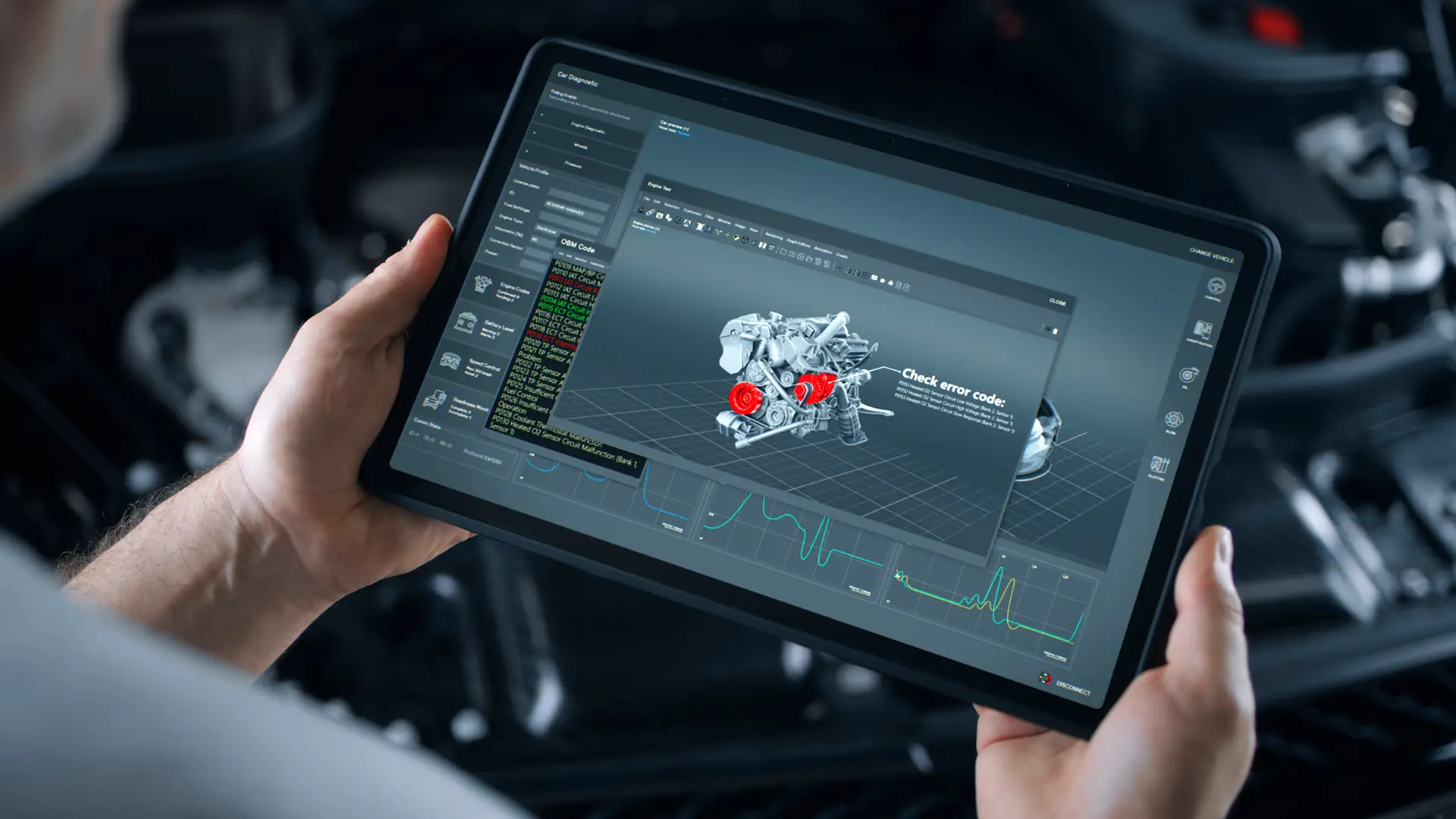
MSX developed AI Virtual Assistant providing instant access to relevant technical documentation based on vehicle-specific diagnostic trouble codes (DTCs) or even generic open queries.

The challenge: Navigating multi-brand complexities

The dealer network of a leading, global manufacturer struggled with accessing multi-brand technical documentation efficiently. With technicians managing multiple brands, navigating different systems, login credentials, and search mechanisms proved cumbersome. This often led to delays in issue resolution, increased support tickets to the Technical Help Desk (THD), and, ultimately, prolonged vehicle off-road times. Additionally, inconsistent usage of Technical Service Bulletins (TSBs) resulted in inefficiencies and higher costs for manufacturers, negatively impacting customer satisfaction.

The solution: AI-powered chatbot implementation

MSX developed AI Virtual Assistant, an AI-powered chatbot that can answer specific questions and diagnosis codes. It provides specific recommendations via a link or document (PDF, Word), or as a summary, depending on the customer’s needs. The chatbot was made accessible to the THD agent providing instant access to relevant TSBs based on natural language queries or specific diagnostic trouble codes (DTCs). Its multi-language support allows agents to interact in various languages, improving accessibility across European markets.

The solution was designed with integration flexibility, allowing it to connect seamlessly to OEM databases or directly retrieve PDFs and other documents. This ensures that agents have easy access to the necessary information. It also includes performance analytics capabilities, which track usage patterns, frequent queries, and the most accessed TSBs.

Implementation was structured into key phases:

  • Feasibility study and requirements gathering

    Conducted workshops with the client to identify primary pain points and determine necessary integrations.

  • Development and integration

    Collaborated with MSX’s CTO team to build a chatbot using pre-configured AI platform, ensuring compatibility with the client’s existing systems.

  • Pilot deployment

    Deployed the chatbot in select dealerships to assess effectiveness and gather feedback.

  • Expansion and enhancements

    Planned for future scalability, including additional documentation integration, historical ticket analysis, and potential voice-command capabilities.

The results: up to 30% ticket reduction and 15% faster resolutions

The implementation of MSX AI Virtual Assistant continues to deliver significant improvements for the brand’s THD. A set of pre-defined Key Performance Indicators (KPIs) measures the frequency of usage, time to complete each issue, most frequent requests asked, and most frequent responses provided per model. This data is then used to continuously improve and optimize training processes facilitating faster issue resolution and helping reduce vehicle downtime, ultimately enhancing customer trust and satisfaction.

The AI chatbot has reduced agent response times for complex cases by 15% by providing faster access to prior solutions. Results also indicate that by providing technicians with direct access to documentation via self-service troubleshooting, the AI chatbot can improve technician efficiency, reduce vehicle downtime, optimize technician support, and increase customer satisfaction through quicker problem resolution. It could also reduce the number of incoming tickets by up to 30% leading to further cost reduction, improved accuracy, and standardization.

Looking ahead, MSX plans to enhance the system by leveraging machine learning for predictive issue resolution and enabling direct vehicle connectivity for real-time diagnostics and issue identification via remote data access. These improvements will deliver greater cost efficiencies for OEMs and further streamline their technical support processes.

The AI-powered chatbot represents a transformative step in automotive aftersales support, enhancing efficiency, reducing costs, and improving overall service quality. By leveraging AI and automation, MSX is pioneering smarter, faster, and more effective solutions for dealer networks and technical support teams, ultimately leading to greater customer satisfaction and significant cost savings for OEMs.

Related case studies

Increasing fleet reliability: Real-world recommendations for preventative maintenance

Increasing fleet reliability: Real-world recommendations for preventative maintenance

Fast facts

Middle-mile logistics partner for a multinational e-commerce company

Faced with rising maintenance costs and inefficient scheduling as its vehicle warranties expired, our client needed a tailored preventative maintenance plan to reduce costs, extend vehicle lifespans, and improve reliability.

United States

MSX developed a data-driven risk modeling solution, using warranty data and survival analysis to create a preventative maintenance schedule. This approach aimed to reduce repair costs, extend vehicle lifespans, and improve reliability, potentially avoiding up to an additional $13 million in spend annually.

Addressing rising costs and inefficiency

The logistics partner for a multinational e-commerce company faced two key challenges as their fleet of vehicles approached the five-year mark – when warranties on many of their vehicles would expire:

  • Rising maintenance cost post-warranty

    During the first few years of vehicle ownership, our client’s costs were manageable, as major repairs were covered by manufacturer warranties. However, after four or five years, those warranties would no longer cover significant repairs, exposing them to potentially millions of dollars in additional maintenance expenses. With vehicles from several OEMs, they faced further complications. Maintenance and failure patterns varied across these OEMs, requiring tailored strategies for each.

  • Inefficient maintenance scheduling

    The existing maintenance schedule was insufficient for its needs. The schedule did not account for the rigorous demands placed on the fleet, leading to inefficiencies in downtime and suboptimal financial performance. In addition, our client lacked clear insights into the financial liabilities of extending vehicle lifespans and whether a more robust preventative maintenance program could mitigate risks and reduce costs.

In short, our logistics client needed a solution that could quantify the financial risk associated with maintaining its fleet post-warranty and propose a preventative maintenance plan that would extend vehicle lifespans, reduce downtime, and improve reliability, all while being cost-effective.

Insights for data-driven maintenance

We approached the client’s logistics team with a data-driven, advanced risk modeling solution that leveraged our expertise in the automotive sector and our ability to work with OEMs to obtain critical warranty data. The solution combined statistical techniques – specifically a reliability analysis – with practical recommendations for vehicle maintenance.

Step 1: Data collection

Our first step was to gather warranty data from the OEMs, which would allow us to understand the failure modes and maintenance requirements for each vehicle model in their fleet. We successfully negotiated with one OEM to provide warranty data not only for our client’s fleet vehicles but also for all similar model vehicles in its fleet, enriching our analysis. In the case of the second OEM, while direct data sharing wasn’t feasible, we leveraged a workaround by scraping the warranty data from its online vehicle information site, which allowed us to obtain the necessary details for its vehicles.

Step 2: Risk modeling

Using the warranty and maintenance data, we created a reliability model for each major vehicle component - such as the transmission, drivetrain, and electrical systems. We employed survival analysis to model the risk of failure for each component over time, allowing us to quantify the probability of failures at various mileage points. This modeling enabled us to predict how the risk of failure would evolve as vehicles aged, particularly after the expiration of their warranties.

Step 3: Preventative maintenance strategy

Once we had a clear understanding of the risks associated with each vehicle and component, we moved on to crafting a detailed preventative maintenance schedule. This schedule was designed to reduce the likelihood of costly, unplanned repairs by performing timely, cost-effective maintenance activities before failures occurred. Our approach considered the maintenance needs of 12-15 critical vehicle components for each OEM, proposing specific interventions (such as replacing batteries or servicing drivetrains) at optimized intervals.

Step 4: Financial analysis and impact simulation

Using the preventative maintenance schedule, we ran simulations to estimate the financial impact of the proposed activities. The goal was to quantify how much our client could save in terms of reduced downtime and repair costs. For example, we found that by implementing our preventative maintenance strategy for the drivetrain and transmission systems, they could avoid up to an additional $13 million in spend annually.

The key to our solution was that it not only helped our client optimize maintenance costs but also allowed the organization to plan for parts and services more effectively. By reducing unplanned downtime and minimizing the need for emergency repairs, it could maintain fleet reliability while cutting costs.

Benefits of a preventative maintenance model

While the full preventative maintenance strategy has not yet been implemented across the client’s entire fleet, the results from our model have already provided significant insights:

  • Cost savings

    By following our recommendations, the company could avoid up to an estimated $13 million in spend annually just by reducing the frequency and cost of major repairs in critical vehicle components.

  • Financial risk mitigation

    Our calculations indicated that without preventative measures, our client would face a 227% increase in repair costs once warranties expired. While this increase cannot be substantially reduced, our focus is on making this out-of-warranty jump as small as possible. Our preventative maintenance schedule provided a clear path to reducing these future liabilities.

  • Improved reliability

    The reliability modeling showed that implementing our maintenance schedule would significantly improve vehicle reliability, leading to less downtime and more efficient operations.

The foundation for long-term savings

As the program continues to evolve, MSX is exploring automation and AI to further streamline rule-based entries and validations. Early estimates suggest that these innovations could significantly reduce workloads for high-volume, low-complexity claims, freeing up dealer teams to focus on higher-value activities and further improving cycle times.

This project exemplifies the power of data-driven decision-making in fleet management. By combining advanced risk modeling and preventative maintenance strategies, we provided this organization with the tools to optimize its fleet maintenance, reduce operational costs, and enhance vehicle reliability. Although the full operational results are yet to be realized, the financial and strategic framework we’ve put in place gives the business a clear path to achieving long-term savings and efficiency gains.

Related case studies

Revving-up parts sales: Leveraging data-driven insights and strategic collaboration

Revving-up parts sales: Leveraging data-driven insights and strategic collaboration

Fast facts

A multinational volume manufacturer

A multinational volume manufacturer sought an opportunity to optimize its aftersales operations with the aim of enhancing efficiency, reducing costs, and improving customer satisfaction amidst evolving market dynamics.

Europe

A dedicated parts sales program restructured operations and utilized data-driven insights and advanced strategies to increase revenue and expand market reach.

A strategic overhaul of aftersales operations

At the time of the project, our client was challenged with increasing competition and evolving market dynamics. The automotive industry was undergoing significant transformation due to stricter emissions regulations, the rise of electric vehicles, and changing consumer preferences, driving the need for a strategic overhaul of their operations to stay competitive and meet new market demands.

One of the critical areas our client needed to address was its aftersales operations, particularly the parts distribution network in Italy. The company aimed to improve efficiency, reduce costs, and enhance customer satisfaction. Key challenges included ensuring optimal stock levels at distribution hubs to minimize stockouts, reducing excess inventory and associated costs while maintaining service levels, and streamlining the flow of parts from warehouses to dealerships to reduce delivery times.

The evolution and impact of the parts sales program

Launched in 2018, the program spanned nearly three years and evolved significantly over time, particularly due to the impact of COVID-19. Initially, the focus was on achieving parts sales targets for both the client’s authorized and multi-brand repair network by implementing 13 hubs dedicated to the sale of branded and private label products across Europe. In 2019, the program shifted its emphasis to optimizing internal processes at these hubs to boost the sell-out of original, multi-brand, and Independent aftermarket spare parts. By 2020, it had further evolved into a Dedicated Parts Sales Program for the brand’s multi-brand car service.

The implementation phase took approximately two to three months, dedicated to project structuring and recruiting over 40 individuals, both internally and externally. These resources included a management team consisting of one project manager and two analysts, four hub development managers, and various sales representatives for different repairer categories. We utilized a data visualization platform to create comprehensive and easily interpretable reports, which enhanced our ability to analyze information and optimize our parts distribution strategies effectively.

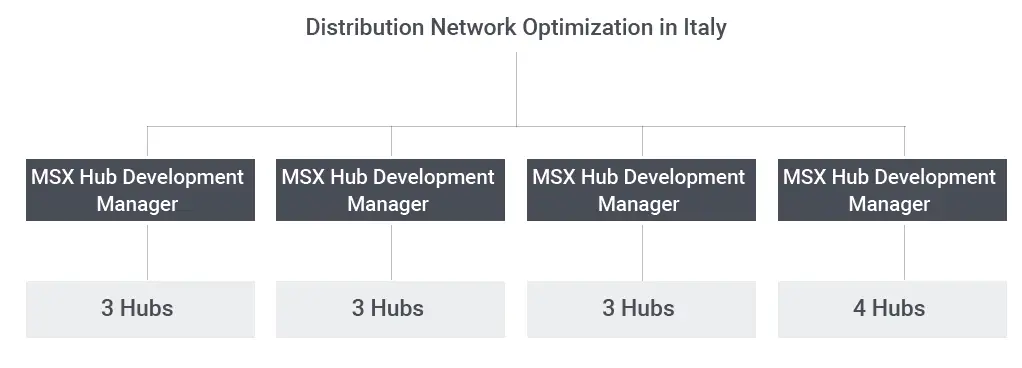
MSX’s data-driven approach provided crucial insights for our client during the launch of their parts distribution hubs in Italy. These analyses included national-level geographic coverage based on UIO (units in operation), advanced stock analysis beyond simple reorder mechanisms, and customer profiling. To optimize the distribution network, 13 hubs were divided equally among four MSX Hub Development Managers, considering the size of each business. Each manager was responsible for a team of nine field resources dedicated to supporting dealers, authorized repairers, and multibrand car service shops. Additionally, a central remote sales team was established to provide further support.

Significant growth and strategic adaptability

Despite its age and numerous iterations, the program demonstrated significant positive outcomes, particularly in its final phase. The multi-brand car service network, which marked the culmination of the project, experienced a remarkable 70% increase in annual parts sales. Additionally, the network expanded by 100 workshops, underscoring the solution’s potential to drive growth and broaden the service network. These impressive results, although specific to the later stages, provide valuable insights into the project’s overall impact and its capacity to stimulate substantial growth.

A key component of the project’s success was the data-driven approach employed by MSX. Utilizing UIO analysis, the team provided critical insights that were instrumental for our client during the launch of their Italian parts distribution hubs. These analyses were heavily relied upon to not only simplify reorder mechanisms but to also include advanced stock optimization strategies. This comprehensive approach ensured that every hub visit was informed by precise and actionable data, enhancing the efficiency and effectiveness of the parts distribution process.

Throughout the project’s duration, flexibility and adaptability were crucial. The evolving landscape required MSX to continuously pivot and adjust their strategies to meet changing circumstances. This ability to remain agile and responsive not only addressed immediate challenges but also positioned the project for long-term success.

The multi-brand Car Service Network, which marked the culmination of the project, experienced a remarkable 70% increase in annual parts sales.

Future considerations: Data-driven insights and collaborative success

Looking ahead, the program is set to build on its foundations, particularly its data-driven approach. The project has proven the critical role that data-driven insights play in optimizing distribution networks. By continuing to leverage advanced analytics and UIO analysis, MSX can further refine stock optimization strategies and enhance the efficiency of parts distribution, which will be pivotal in navigating the complexities of evolving market demands and ensuring sustained growth.

Equally important is the emphasis on collaboration. The success of the project so far has hinged on the strong partnerships between key stakeholders. Effective communication and coordination have been essential in aligning goals and executing strategies seamlessly. Moving forward, fostering these collaborative relationships will remain crucial. By maintaining open lines of communication and working closely with all parties involved, MSX can continue to drive innovation and achieve shared objectives, ensuring the program’s ongoing success and adaptability in a dynamic industry landscape.

Related case studies

Advancing EV technical information: Harnessing gen-AI to revolutionize content creation

Advancing EV technical information: Harnessing gen-AI to revolutionize content creation

Fast facts

Bollinger Motors, a new EV manufacturer focused on medium-duty electric trucks in North America

The absence of detailed source information and documentation from many third-party suppliers posed a significant obstacle in generating the required technical content for service manuals, wiring diagrams, and other essential documents.

North America

MSX integrated a gen-AI tool within pubFoundry allowing Bollinger Motors to accelerate the development of technical content despite significant gaps in source documentation.

The challenge: Overcoming startup hurdles

Like many startups, Bollinger Motors, a new EV manufacturer focused on medium-duty electric commercial trucks in North America, faces numerous challenges in scaling its operations and ensuring product quality. Its vehicle assembly involves integrating multiple subsystems from various Original Equipment Manufacturers (OEMs) and suppliers. The organization’s biggest challenge, however, is the absence of detailed source information and documentation from many of these third-party suppliers. This posed a significant obstacle in generating the required technical content for service manuals, wiring diagrams, and other essential documents, making traditional content development a slow and costly process.

This lack of comprehensive source documentation would traditionally involve a time-consuming manual process where the team would reverse-engineer similar components, gather field data, validate assumptions, and author documentation from scratch. This slow process put Bollinger at risk of delaying its market entry, with no clear solution in sight.

The solution: Gen-AI integration with pubFoundry

To overcome these challenges, MSX introduced a game-changing tool, “Pete,” within their content management system (CMS), pubFoundry. Pete is a virtual assistant powered by Generative AI, specifically integrated with OpenAI, that facilitates the creation of technical content in XML, the format required by the CMS.

Pete functions by scraping the open web for relevant data and assembling a draft of the technical content based on user queries. For instance, if the MSX team needs information about how climate controls work on a specific type of cab, Pete retrieves data and structures it in XML format, tagging the metadata required for pubFoundry integration.

The information can then be integrated seamlessly into pubFoundry, which is crucial for storing, tagging, and publishing technical content. The AI tool within pubFoundry becomes indispensable, allowing the generation, mapping, and manipulation of content into formats that can be readily deployed across multiple platforms, including service manuals, owner manuals, and technician resources. This allows organizations to maintain consistency, accuracy, and scalability in their documentation.

Although the content Pete generates isn’t entirely ready for immediate use, it delivers a solid base that the MSX team can then refine and validate. This eliminates the need for manually gathering source data and reduces the time spent authoring technical information, significantly speeding up the overall process.

This AI-enhanced process is particularly beneficial for EV startups like Bollinger. Without legacy systems and the massive resources of established OEMs, disruptors often face difficulties when scaling rapidly. By utilizing generative AI, startups can overcome the hurdles posed by missing or incomplete documentation, thereby accelerating their product development and entry to market.

The pilot program was launched with an initial focus on two high-impact alert categories: oil quality and scheduled maintenance. By prioritizing actionable insights and minimizing false positives, the solution enabled more intelligent, timely, and human-centered customer interactions.

The result: Time and cost savings

By using Pete, MSX reduced the time and effort required to create technical content for Bollinger, demonstrating that the integration of Gen-AI has accelerated the technical content creation process. Instead of starting from scratch, the AI-generated content provided a robust foundation that saved considerable manual labor. Additionally, this process minimized the risks of errors and omissions that often occur when working with incomplete or missing documentation.

By leveraging AI, MSX shortened the path to market, ensuring that Bollinger can meet its goal of launching its trucks within a calendar year.

Gen-AI in technical content creation

As Gen-AI technology continues to evolve, its role in technical content creation is likely to expand. We believe that much like the evolution of translation services — where AI handles 90% of the content, with humans performing a final quality check — technical information authoring will eventually follow suit. Whoever integrates AI most effectively into their content creation workflows will have a significant competitive advantage.

“Partnering with MSX allowed us to know we will have the necessary technical information on-time and accurate for our end users, both Customers and Technicians, when launching our EV truck fleet.”

Rob Marcott, Aftersales Network Director, Bollinger Motors

Related case studies

Transforming EV lead conversion: Delivering tailored, data-driven customer experiences

Transforming EV lead conversion: Delivering tailored, data-driven customer experiences

Fast facts

European volume OEM

With an excess of electric vehicles returning from leasing contracts, the OEM needed a more personalized approach to optimize customer engagement and sales conversion rates.

Germany

MSX E.COM Personal Landing Page (PLP) program delivered tailored, data-driven experiences for customers, allowing for automated communications and follow-ups, and provided clear options for customers to buy, extend their lease, or opt out.

A European volume OEM found itself with an excess of electric vehicles returning from leasing contracts that needed to be sold or have their lease terms extended. Despite the inherent customer interest, the traditional lead conversion approach lacked the level of personalization needed to optimize customer engagement and conversion rates.

The organization approached MSX with the specific challenge and sought a comprehensive solution that could transform its sales approach. MSX recognized the need for a more dynamic and personalized customer engagement strategy to effectively manage the influx of returning electric vehicles.

Without a digital strategy that could support direct and tailored communication, the OEM’s existing sales processes were proving inefficient. The retail group required a solution that could centralize customer interactions, streamline communications, and drive higher conversions.

MSX implemented its innovative MSX E.COM Personal Landing Page (PLP) program to address the client’s needs. The PLP program is designed to create personalized and OEM branded data-driven experiences for customers by combining advanced software and automated communication strategies.


Introducing personalized digital strategies

To address the challenge, MSX implemented a solution centered around customized PLPs. Each lead, or customer, received a unique landing page tailored specifically to their vehicle details and status in the sales funnel. This personalized approach allowed customers to view offers that were relevant to their lease status and preferences, whether it was to purchase their current vehicle or extend their lease. By providing this level of customization, they could engage customers more effectively and cater to their individual needs.

The system also featured automated communication and engagement, which played a crucial role in maintaining customer interest. Personalized emails and follow-up messages were automatically triggered based on each customer’s response and engagement levels. If a customer did not respond within three days, the system would initiate additional outreach via the PLP or a specialized inside sales agent to keep the customer engaged. This automation ensured that no potential lead was overlooked, and that communication remained consistent and timely.

Each PLP provided customers with three straightforward options: to buy the car, extend the lease, or opt out. This clarity, combined with a user-friendly interface, empowered customers to make decisions on their own terms. By simplifying the choices and making the process transparent, the OEM could enhance customer satisfaction and trust.

The PLP campaign was designed to operate with minimal human intervention, allowing the sales teams to focus on high-potential leads. The automated system managed the bulk of the interactions, ensuring that within two months, all 1,300 customers received a consistent and personalized experience. This approach not only improved efficiency but also allowed the sales team to allocate their efforts more strategically, ultimately driving higher conversion rates.

Each PLP provided customers with three straightforward options: to buy the car, extend the lease, or opt out. This clarity, combined with a user-friendly interface, empowered customers to make decisions on their own terms. By simplifying the choices and making the process transparent, the OEM could enhance customer satisfaction and trust.

The PLP campaign was designed to operate with minimal human intervention, allowing the sales teams to focus on high-potential leads. The automated system managed the bulk of the interactions, ensuring that within two months, all 1,300 customers received a consistent and personalized experience. This approach not only improved efficiency but also allowed the sales team to allocate their efforts more strategically, ultimately driving higher conversion rates.

Transforming sales with automated communication

The introduction of MSX’s PLP program brought several significant benefits to the OEM’s sales process. One of the most notable advantages was the enhanced personalization of customer interactions. Each communication and offer were tailored to the customer’s current situation and preferences, ensuring that every message was relevant and engaging. This level of customization helped build stronger relationships with customers and increased their likelihood of responding positively to the offers presented.

The system automated all communications and follow-ups, which significantly reduced the manual workload for the OEM’s salesforce. This automation ensured that messages were sent in a timely and consistent manner, maintaining customer engagement without the need for constant manual intervention. As a result, the sales teams could focus their efforts on more strategic tasks, knowing that the system was handling routine follow-ups efficiently.

With a centralized platform to track responses and analyze customer behaviors, The group’s sales teams could easily identify and prioritize the hottest leads. This streamlined approach allowed for a more efficient use of resources, as the teams could concentrate on leads that were most likely to convert. The ability to quickly and accurately assess customer interest meant that sales efforts were more targeted and effective.

By combining advanced software with automated communication strategies, the OEM was able to engage customers more effectively and drive higher levels of engagement. The result was a significant increase in conversions, demonstrating the value of a tailored, data-driven approach to customer interaction and sales management.

Optimizing sales with data insights

The results of the PLP campaign were exceptional, showcasing the potential of MSX’s data-driven sales strategies. Out of 1,300 potential leads, the campaign generated over 500 conversions, with 300 customers signing contracts to purchase their vehicles directly through the PLP and an additional 200 supported through other sales channels. This translated into a 43% conversion rate from engaged leads to hot leads, significantly higher than traditional sales methods, demonstrating the effectiveness of personalized communication in capturing customer interest.

They also saw an 80% improvement in segmentation accuracy, allowing them to target their communications more precisely. Additionally, there was a 63% success rate in personalized outreach compared to their standard, non-personalized campaigns. These metrics highlight the efficiency and effectiveness of the PLP program in enhancing customer engagement and driving sales.

By blending innovative technology with human-centric processes, our client was able to achieve superior outcomes, leveraging MSX E.COM’s capabilities to move inventory quickly, engage customers more effectively, and transform their approach to lead management and conversion.

The combination of a tailored PLP solution, data-driven insights, and automated communication resulted in a comprehensive solution that went beyond addressing their immediate challenge. It set a new standard for personalized customer engagement in automotive sales. The program’s success is a clear indicator of how a well-executed PLP solution can drive tangible business results, paving the way for future implementations across their network.

More than 500 conversions, including 300 direct purchases and 200 through other channels.

Conversion rate from engaged leads to hot leads.
0 %
Improvement in segmentation accuracy.
0 %
Success rate in personalized outreach compared to standard campaigns.
0 %

Related case studies

Optimizing conversions: Boosting efficiency and driving growth with non-human lead management

Optimizing conversions: Boosting efficiency and driving growth with non-human lead management

Fast facts

An American EV disruptor

Struggling with inefficiencies and conversion rates in lead management, particularly when it comes to integrating human interactions with digital tools, our client identified a pressing need for a solution that would allow customers to choose how they communicate, while also enabling them to maintain a high level of personalization and efficiency.

Europe

A digital solution that merges cutting-edge AI, automation, and human interaction to create a flexible, scalable, and modular approach to lead management, catering to different customer preferences while ensuring cost efficiency for OEMs.

The automotive industry has long faced challenges in lead management, especially in seamlessly integrating human interactions with digital tools and ensuring transparent follow-up throughout the sales journey to the point of conversion. Balancing customer preferences for personalized communication with the need for scalable and cost-effective processes can be a challenge for OEMs. Additionally, fluctuating workloads make it difficult to rely solely on full-time employees (FTEs), as human interactions require flexibility that can be difficult to achieve with a traditional workforce.

While most OEMs run marketing campaigns across various digital platforms such as Meta, Instagram, and LinkedIn, they often struggle to effectively capture and engage leads. They require the correct coding in place to capture lead data and turn this initial interest into successful conversions via personalized interactions. However, some customers still value human contact, especially when making significant decisions like purchasing a vehicle.

One American EV disruptor urgently needed a solution that would allow customers to choose their preferred communication methods, while also enabling them to maintain high levels of personalization and efficiency. This solution would ensure continuous follow-up throughout the sales journey, from lead to conversion.

Merging AI, automation, and human interaction

MSX developed an innovative, digital lead management solution that merges cutting-edge AI, automation, and human interaction to create a flexible, scalable process. This approach was designed to cater to different customer preferences while ensuring cost efficiency for OEMs.

The key to this solution is a modular approach to lead management that could adapt to varying levels of human involvement. Using advanced data gathering techniques from a variety of channels (including dealer systems, customer relationships management platforms, and social media channels), MSX compiled leads from diverse sources like Meta, Instagram, and web advertisements. Once customer data was captured, the system applied sophisticated clustering algorithms, utilizing 12 criteria to categorize leads into five distinct clusters based on purchase intent. This granular approach allowed for highly targeted communication tailored to the needs of each customer.

person-working-futuristic-office

” By implementing a digital-first approach with minimal human interaction, the company saw a dramatic increase in lead conversion rates, boosting discovery-to-conversion rates from 50% to 90%.”

Personalizing the customer journey

Customers were then presented with personalized landing pages (PLPs) that contained detailed vehicle information, offers, and options for further engagement. Depending on their cluster, customers could choose to continue their journey digitally via WhatsApp, connect with a salesperson, or schedule a test drive. The entire process, from lead generation to the final stages of conversion, was streamlined and digital, with human involvement only occurring when necessary—such as during a test drive.

In less than two months, MSX successfully developed a customized digital solution that aligned with the specific brand DNA and met the unique expectations of its customers, an impressive achievement given the complexity of the integration across multiple platforms. The modular design is fully customizable, allowing OEMs to adjust the level of human interaction as needed, depending on customer preferences or campaign demands. Whether the OEM is running a new vehicle launch, a seasonal campaign, or targeting a specific geographic region, the system’s scalability ensures that resources can be adjusted quickly and efficiently.

This approach allows the OEM, or lead management hub, to select only the elements they need, such as digital lead capture, personalized communication via PLPs, or direct sales team integration, making this solution flexible, and adaptable to the unique needs of the client.

Delivering unmatched efficiency and engagement

MSX’s digital lead management solution offered a host of benefits that addressed the OEM’s challenges and exceeded expectations:

  • Cost efficient

    By reducing reliance on full-time employees (FTEs), the solution lowered labor costs and optimized resource usage. The ability to scale human interaction up or down based on demand provided significant operational savings.

  • Scalable and fexible

    The system is highly adaptable to different market conditions, campaigns, and geographic expansions. The OEM quickly adjusted their approach based on shifting customer needs or varying lead volumes.

  • Personalized engagement

    With advanced AI and data clustering, MSX was able to deliver highly personalized customer experiences. The use of customer intelligence platforms (CIP) and customer data platforms (CDP) allowed for better targeting, improving the relevance of messages sent to leads.

  • Higher conversation rates

    By delivering tailored communications and allowing customers to choose how they interact with the brand, MSX’s solution increased lead conversion rates. The personalized landing pages, targeted offers, and seamless transition to human sales agents or digital tools significantly improved customer engagement.

  • Data migration

    The system allows two-way communication via data API migration, meaning there’s no need for a complex CRM integration or DMS interface. An MSX layer over the existing CRM provides more robust functionality and flexibility, while significantly enhancing convenience for both customers and the network.

By integrating AI, automation, and personalized customer experiences, MSX provided a solution that not only boosted operational efficiency but also significantly enhanced customer engagement and conversion rates. The OEM now benefits from a scalable, flexible solution that can be tailored to meet the demands of a rapidly evolving market, keeping them ahead of the competition while delivering exceptional customer experiences. Additionally, the entire sales journey is meticulously documented, offering the OEM transparent and detailed reporting at every stage.

Related case studies