Retail denial: Why automotive strategies are dying in the showroom

Retail denial: Why automotive strategies are dying in the showroom

Automotive retail is currently suffering from a dangerous disconnect. While many head offices are moving away from a single sales model in favor of flexible hybrid arrangements, a new gap is opening between strategy and reality.

These hybrid models are designed to find a perfect balance: OEMs can act as agents for high-value products to maintain brand control, while dealers keep their independence in other areas to stay responsive to their local markets. It sounds like the perfect compromise, but the execution is falling further behind. We are seeing an industry-wide “denial gap,” where the sheer complexity of managing these blended roles is quietly suffocating the very transformations designed to save the network.

We launched our nine-week Sales and Revenue Transformation campaign to move beyond theoretical discussions and uncover where the commercial journey is actually breaking down. By examining the transition to these new hybrid models and the resulting pressure points in retail and service, we aimed to identify the practical barriers that prevent MSX clients – both OEMs and dealer groups – from recovering lost revenue.

The feedback from over 500 automotive specialists, retail leaders, and commercial experts who participated in our research was clear: the industry doesn’t have a strategy problem. It has an execution crisis.

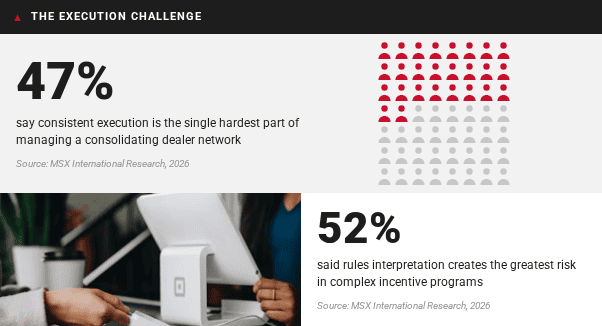
Across the campaign, the findings pointed to the same underlying issue. 47% of respondents identified consistent execution as the hardest part of managing a consolidating dealer network, while 52% said rules interpretation creates the greatest risk in complex incentive programs. In both cases, the challenge is clear: strategy only delivers value when people across the network can understand it, apply it, and act on it consistently.

Graph showing 47% struggle with consistent execution in automotive retail.

This is the point where high-level strategy often meets a dead end. A transformation only matters if it changes what happens between a salesperson and a customer, or a service advisor and a vehicle owner. If it doesn’t scale consistently across every market and every touchpoint, it isn’t transformation – it’s just paperwork.

Changing the sales model won’t fix a visibility problem

The industry is racing toward agency and hybrid models in search of control. But control requires clarity. Our research found that role clarity and network visibility were the primary concerns for 32% of respondents in these new models.

Graph showing 32% of respondents cite role clarity and network visibility concerns.
If a dealer doesn’t know where their responsibility ends and the OEM’s begins, the customer will be the first to find out. MSX CX Consultancy helps brands bridge this gap by redesigning journeys that actually function in a multi-channel world. To protect conversion at the digital stage, solutions like MSX E.COM Personal Landing Pages and MSX Consumer Engagement Solutions ensure that the customer doesn’t fall through the cracks of a disconnected handoff.

Scale is currently the enemy of consistency

As dealer groups consolidate, they gain massive scale – but they often lose grip on the “how.” When nearly half of the industry says consistency is their biggest headache, it proves that “bigger” isn’t “better” without a way to steer the ship.

You cannot manage a global network through a rear-view mirror. MSX ENGAGE provides the alignment necessary to keep large groups moving in unison, while APPRAISO turns static compliance into dynamic performance steering. If you can’t see the gap, you can’t close it.

Incentive complexity is an execution problem

Incentive schemes only steer behavior if the network understands them. Our research found that 52% of respondents identify rules interpretation as the greatest risk in complex programs, far outweighing concerns over audit readiness.

When rules are open to interpretation, inconsistency quickly erodes claims accuracy and partner trust. MSX Sales Incentive Audit program can support automotive brands in strengthening the governance, clarity, and audit trail behind incentive programs, helping ensure commercial activity is measured and rewarded with greater confidence.

Aftersales is where your revenue is leaking

While the industry obsesses over the “new car” sales model, the largest profit pool – aftersales – is under-managed. 34% of respondents identified service booking as the number one source of revenue leakage, outranking online leads and showroom follow-ups.

Graph showing 34% revenue leakage from service booking in automotive industry.

We are seeing a market where customers prioritize speed and ease over brand loyalty. If your booking journey is a barrier, your revenue is already gone. In the article Is convenience killing the automotive service industry?, we highlight that convenience is the new currency. MSX Mobile Service is a direct response to this, reclaiming capacity and utilization by meeting the customer where they are, rather than waiting for them to show up.

Data is noise if it doesn’t drive coaching

We are drowning in data but starving for insight. 30% of professionals told us that coaching impact and service performance are their biggest blind spots.

As we explored in Is the traditional KPI dead?, reporting what happened last month is no longer a management strategy. MSX Sales Performance uses diagnostics to uncover the why behind the numbers, ensuring that every intervention is targeted and measurable.

Stop training, start coaching

Perhaps the most telling finding was that 34% of respondents blame inconsistent coaching for stalling sales improvement, while 29% cited low adoption.

Graph showing coaching and adoption gap in automotive sales strategies.
The traditional “classroom” approach to retail improvement is failing. Change only happens when it is reinforced locally and daily. MSX COACH and our wider Learning Solutions move capability building out of the HR department and into the showroom flow, ensuring that strategy actually translates into behavior.

High stakes for high performance

The automotive retail landscape is being rebuilt. Whether the resulting structure is profitable or simply more complex depends entirely on your ability to close the gap between what you say you will do and what your network actually delivers. Transformation should not be a pilot program that never reaches scale; it should be the standard.

Your strategy is only as good as its last mile. If your transformation isn’t reaching the showroom floor, it isn’t delivering value.

Don’t let your strategy stall at the showroom door. Contact MSX to discuss how we can help you bridge the gap between strategy and a high-performing network.

Related Articles

Fleet performance is decided long before the vehicle leaves the fleet

Fleet performance is decided long before the vehicle leaves the fleet

There is a point in every fleet lifecycle when earlier decisions become visible. It may happen when maintenance costs rise sharply after warranty. It may happen when vehicles spend too much time off the road. Or it may happen at remarketing, when the final value of a vehicle reflects everything that came before it. Although these issues may appear unrelated, they often share the same root cause: the decisions made throughout the vehicle’s lifecycle.

Fleet performance is not defined by one event. It is shaped by thousands of decisions about maintenance, repairs, vehicle use, supplier performance, data management and customer support. Every decision influences the next stage of the lifecycle.

As fleet operations become more complex, understanding these connections is becoming a competitive advantage.

Looking beyond individual events

Many organizations still manage fleet operations as a series of separate activities. Maintenance, operations, procurement, finance and remarketing each focus on their own priorities. This approach creates blind spots. Maintenance teams monitor repairs. Finance measures cost. Operations track vehicle availability. Customer teams focus on service quality. Remarketing teams concentrate on residual values. Each perspective is valuable, but none provides a complete picture.

For leasing companies in particular, every part of the vehicle lifecycle is connected. Decisions that reduce costs today may increase downtime tomorrow. A repair completed quickly may influence future resale value. A gap in service history may only become visible when the vehicle reaches the used vehicle market.

Managing these activities independently makes it difficult to understand how today’s decisions affect tomorrow’s performance.

Maintenance is an investment, not simply a cost

Maintenance provides one of the clearest examples of this connected thinking. It is often viewed as an operational requirement or a cost to control. In reality, it is one of the strongest drivers of vehicle uptime, customer satisfaction and long-term asset value.

The more important question is not whether a vehicle has been maintained. It is whether it has been maintained in a way that protects performance throughout the rest of its lifecycle.

A recent project by MSX demonstrates this clearly. Working with a middle-mile logistics provider, the team analyzed warranty and maintenance data as a large proportion of the client’s fleet approached the end of its warranty period. Rather than waiting for repair costs to increase, the objective was to understand where future risks were likely to emerge.

Using reliability modelling and survival analysis, MSX identified how failure rates for key vehicle components would change over time and mileage. This enabled the client to move from reactive repairs to a more targeted preventative maintenance strategy.

The findings were significant. Without intervention, major repair costs were projected to increase by 227% after warranty expiry. A more proactive maintenance strategy had the potential to avoid up to US$13 million in annual repair costs.

The figures themselves are specific to this project, but the lesson is universal. The decisions made while a vehicle is in service have a direct impact on future operating costs, uptime and asset value.

Electric vehicles introduce a new lifecycle challenge

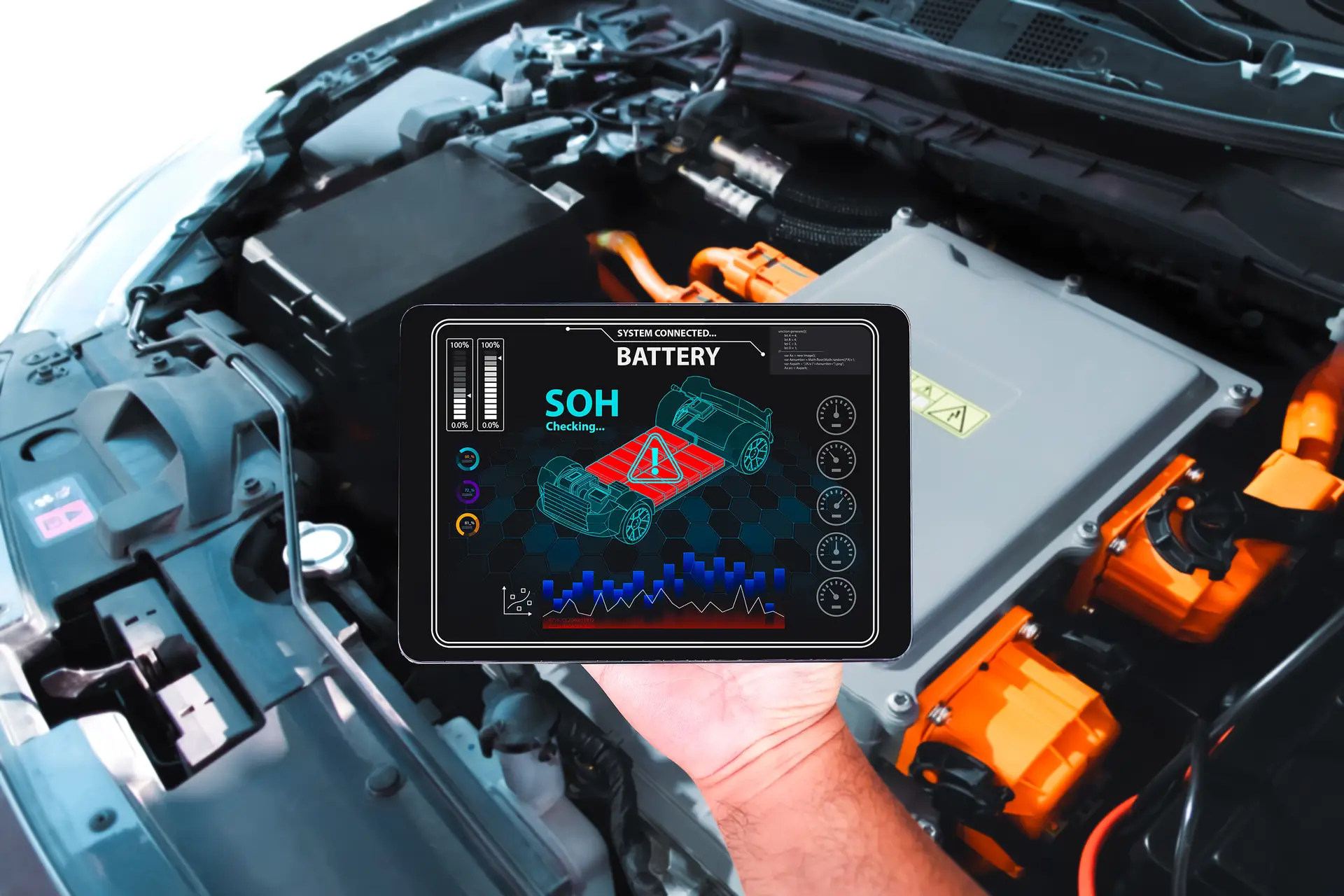
The growth of electric vehicles (EVs) makes lifecycle management even more important. Although EVs simplify some aspects of maintenance, they also introduce new considerations. Battery health, charging behavior, software updates, thermal management and diagnostic capability all influence vehicle performance throughout its life.

Two EVs with identical mileage may have very different long-term value depending on how they have been operated and maintained. This becomes particularly important when vehicles reach remarketing. Buyers are no longer evaluating only the vehicle itself. They also want confidence in the condition of the battery, the quality of the service history and the availability of accurate technical information. That confidence cannot be created at the point of resale. It must be built throughout the vehicle’s operational life.

For leasing companies, this makes lifecycle management as much a commercial discipline as a technical one.

Remarketing begins much earlier than resale

Remarketing is often viewed as the final stage of the vehicle lifecycle. In reality, it reflects everything that came before it. Residual value is influenced by maintenance quality, repair decisions, damage management, service documentation, refurbishment planning and vehicle condition. Every stage contributes to the final outcome.

For EVs, documentation becomes even more valuable. Clear records of battery condition, software updates and servicing help reduce uncertainty for buyers and support stronger resale values. This means protecting residual value cannot be left to remarketing teams alone. It requires organizations to ask broader questions throughout the vehicle’s life.

When these questions are considered earlier, remarketing becomes a measure of lifecycle performance rather than simply a sales process.

From more data to better decisions

Most fleet organizations already possess extensive operational data. The challenge is not collecting more information. It is connecting the information that already exists.

A rise in maintenance costs may indicate changing component reliability. Increased downtime may highlight supplier performance issues. Battery health data may become an indicator of future residual value. Missing service records may reduce buyer confidence long before a vehicle reaches the used market. Viewed individually, these signals offer only limited insight. Viewed together, they provide a clearer understanding of where operational risk is developing and where intervention will have the greatest impact.

Technology plays an important role, but data alone is not enough. Effective lifecycle management combines data with operational expertise, enabling organizations to make decisions that are commercially sound, technically practical and focused on long-term performance.

A more connected approach to fleet performance

Fleet and leasing companies face increasing pressure to improve efficiency while controlling costs, maximizing uptime and protecting residual values. At the same time, the transition towards more diverse fleets, changing customer expectations and increasing operational complexity means traditional approaches are becoming less effective.

The next stage of fleet performance will not come from optimizing individual processes in isolation. It will come from understanding how every stage of the vehicle lifecycle influences the next. MSX helps organizations connect these dots, transforming individual decisions into a cohesive strategy that protects asset value and improves long-term profitability.

Connect with us today to move beyond managing individual events and start mastering the lifecycle intelligence that drives your fleet’s total performance.

Contact the Author

Round-images (2)

Amedeo Raise

Head of Fleet Solutions

Round-images (2)

Amedeo Raise

Head of Fleet Solutions

Related Articles

The profit lifecycle: Where automotive profit is really won

The profit lifecycle: Where automotive profit is really won

Stop looking for profit in the wrong places. Profit is often viewed as the result of financial performance. It appears in margin reports, return on sales figures, aftersales revenue, and year-end results. Those measures matter, but they only tell part of the story. They show the outcome, not how it was achieved.

The reality is that profit is created, protected, and sometimes lost long before it appears on a financial statement. It starts when a vehicle enters the market and continues through every customer interaction, service visit, repair, recall, and operational decision that follows.

Between market entry and aftersales, the sales journey also plays a critical role in profitability. Solutions such as E.COM Personal Landing Pages and APPRAISO help brands strengthen customer engagement, support retailer performance, and create value from the moment a vehicle becomes available.

The organizations that consistently outperform their competitors understand that profitability is not owned by one department. It is influenced by how effectively the entire business works together. Faster market entry. Better repair quality. Reduced vehicle downtime. Smarter customer engagement. More efficient recalls. Stronger technical support. These may be viewed as separate activities, but each plays a role in shaping commercial outcomes. The most successful automotive businesses are beginning to connect these dots. They are shifting their focus from measuring profit at the end of the journey to understanding how value is created at every stage of it. Because in today’s automotive industry, profit doesn’t simply appear in the numbers. It follows the vehicle. It begins before the vehicle reaches the customer.

Homologation is often treated as a compliance task. In reality, it affects launch timing, internal coordination, retailer readiness, and time to market. When approvals move smoothly and documentation is well managed, businesses protect commercial momentum. When they do not, delay becomes cost. That is one reason MSX Homologation Services matter from a profitability point of view, not only a regulatory one

Once the vehicle is in market, profit becomes even more operational.

A sale creates revenue. The ownership journey determines how much value is retained and grown. Service access, technical accuracy, convenience, recall execution, and customer communication all shape whether a customer stays loyal and whether the network runs efficiently. This is where many organizations still underestimate margin loss.

In Is convenience killing the automotive service industry?, MSX highlighted something the industry is feeling every day: convenience has become a real driver of customer retention. If customers cannot book quickly, get clear updates, or access flexible service options, the cost is not only dissatisfaction. It is missed revenue, weaker retention, and lower lifetime value.

Customer engagement shows the same pattern. A leading automotive brand improved call conversion by 18% and achieved a further 6% conversion uplift through WhatsApp by moving from static outreach to real-time, needs-based contact. Better timing. Better relevance. Better results. Read the full story  .

Inside the workshop, profit is shaped by speed and clarity.

When technicians spend too long searching for repair information, or support teams are buried in repeat queries, productivity falls and downtime rises. In validation work with a leading multinational manufacturer, the MSX AI Virtual Assistant reduced support tickets by 30% and improved response times by 15% by helping technicians access technical service bulletins, repair manuals, and diagnostic trouble codes faster. That is operational efficiency with a direct commercial effect.

Repair quality is another area where workshop performance shapes profitability in ways that are easy to overlook. Repeat repairs, inconsistent diagnosis, and poor repair order discipline all create cost: rework, warranty exposure, customer dissatisfaction, and avoidable operational expense. MSX Repair Quality Support addresses this through a structured, data-led program that helps OEMs and dealer networks improve first-time fix rates (FTFR), standardize repair execution, and prioritize intervention where it has the greatest impact. The results are measurable: up to a 5% improvement in first-time fix and up to a 20% productivity increase across the network.

The same is true for technical content. Documentation often sits in the background, but slow publishing cycles and fragmented authoring processes create friction across the network. pubFoundry helps improve content flow, consistency, and speed, which supports better service performance and more efficient knowledge sharing.

A wider shift is happening here too.

This shift is changing how automotive businesses think about performance. In Beyond the numbers and Is the traditional KPI dead?, MSX explored why historical KPIs alone are no longer enough. Organizations need better context, better prediction, and a clearer understanding of what is driving performance – not just what has already happened.

That shift matters because profit is easier to protect when organizations can see problems early and act before cost becomes visible.

Profit is easiest to lose when complexity increases.

Recalls also deserve a place in the profit conversation. Poorly managed recalls do more than add cost. They put pressure on capacity, frustrate customers, and weaken trust. MSX Recall Management helps coordinate scheduling, capacity, and customer contact so that recalls are completed more efficiently and with less disruption. For fleet operators and mobility providers, lifecycle risk makes the point even more clearly. In this customer success story: Increasing fleet reliability, MSX showed how a preventative maintenance model could help a logistics operator avoid up to $13 million in annual spend. That is what happens when data is used early enough to protect value before cost becomes visible.

So where is profit really created?

Across all of these examples, the message is consistent: Profit is shaped through operational decisions, customer experience, service efficiency, compliance readiness, technical support, and lifecycle management.

In other words, profit follows the vehicle. The organizations that understand the profit lifecycle will be better positioned to identify hidden margin loss, strengthen customer loyalty, and create sustainable performance at every stage of the journey.

The question is not whether profit is being won or lost. The question is where.

Which stage of the vehicle lifecycle has the greatest impact on profitability in your organization? Connect with us to continue the discussion.

Related Articles

The data cycle: Where insights drive actions, and actions fuel insights

The data cycle: Where insights drive actions, and actions fuel insights

Field operations are one of MSX’s most influential capabilities because transformation happens where customers interact with your brand. Every year, we visit and coach thousands of retail locations, and that number continues to grow. These engagements are not routine checks, but strategic interventions designed to elevate performance, customer experience, and profitability.

OEMs recognize the value of this service because, in today’s highly analytical era, success demands more than intuition. It requires rigorous evaluation, actionable insights, and alignment with evolving customer expectations. Field operations bridge the gap between strategy and execution, ensuring every recommendation is grounded in evidence and tailored to real-world conditions.

Analytical practices have matured and so have the tools behind them. Advances in data engineering, governance, cataloguing, and generative AI have redefined what’s possible. These capabilities allow us to move beyond static reporting to dynamic, predictive insights – delivering multiple KPIs and repeatable, high-quality analysis at speed. We can now identify which operational practices drive measurable improvements in customer satisfaction and replicate those successes across entire networks.

Redefining value

Calculating the ROI of field programs has always been complex. At MSX, we’re committed to solving that challenge with transparency and precision. Our ambition is to transition every field operations program to a pay-for-performance model – a bold move that aligns our success with yours. By linking compensation to measurable outcomes, we reduce risk for OEMs, demonstrate accountability, and prove the value of every intervention with data-driven evidence.

Precision in practice

One of the biggest hurdles in measuring program impact occurs when participants are not selected at random. This can make results misleading, as differences may stem from factors like size, location, or experience rather than the program itself. A simple A/B test often falls short in these cases. However, when control and treatment groups are randomized, A/B testing becomes a powerful methodology – enabling us to uncover and validate cause-and-effect relationships between variables and their impact on business performance. This creates a precise benchmark for informed business discussions.

Beyond single experiments, our technical capabilities allow us to run multiple tests simultaneously, optimizing operational practices and recommendations in real time.


Your data is just the starting point. We enrich it with hundreds of additional datasets from internal sources and world-class partners to give you a panoramic view of performance. This expanded dataset enables broader benchmarking so you can see how your network compares internally and against industry leaders. It positions your success in the context of competitive standards, helping you identify where you outperform and where improvement is needed.

By combining your operational KPIs with regional market data, we can pinpoint which service practices deliver the highest customer satisfaction in similar markets. Accuracy ensures these insights are based on validated, reliable data, while transparency means you understand the methodology behind every recommendation. This clarity empowers you to make strategic decisions with confidence – whether that’s reallocating resources to high-performing regions, refining training programs, or introducing new customer experience initiatives.

Unearthing the full picture

The numbers tell part of the story – but not all of it. While quantitative data reveals trends and performance metrics, qualitative insights uncover the “why” behind those patterns. Our tools integrate both dimensions seamlessly. By applying propensity score matching – a method that creates fair comparisons by matching entities with similar characteristics – we eliminate bias and ensure evaluations reflect true impact. This means you’re not just comparing dealerships by size or geography – you’re benchmarking performance against peers with similar operational realities.

At the most granular level, we track practice adoption and assess implementation quality. This allows us to answer critical questions: Are the recommended processes being followed? How effectively are they executed? These insights highlight gaps that raw numbers can’t capture, such as cultural barriers or training needs that influence outcomes.

Turning insight into action

Empowering our field teams is fundamental to driving transformation. We equip them with actionable data and encourage critical thinking, enabling them to interpret insights rather than simply report them. This blend of quantitative evidence and qualitative context ensures recommendations are not only statistically significant but also practical and tailored to real-world conditions.

A data model might show that a specific service process improves customer satisfaction scores. But qualitative feedback from the field could reveal that adoption is slow due to resource constraints. By combining these perspectives, we design interventions that are both effective and feasible – whether that means adjusting training programs, reallocating resources, or refining operational guidelines. This integrated approach turns field teams into strategic partners, capable of influencing outcomes and shaping best practices across the network.

The road ahead is complex, but MSX has the expertise to navigate it. We’ve iterated across multiple OEM datasets, refining our approach to causal analysis and preparing for rollout at scale. Our internal data capabilities are evolving to meet – and exceed – the challenges facing mobility players today.

If you’re ready to turn data into a competitive advantage and transform your field operations into a performance-driven engine, let’s start the conversation.

Connect with MSX today and discover how we can help you lead the future of mobility.

Contact the Author

Felipe_Cruz

Felipe Cuz

Global Solutions Leader, Actionable Insights

Felipe_Cruz

Felipe Cruz

Global Solutions Leader, Actionable Insights

Related Articles

Beyond the numbers: How real-world insights are shaping automotive retail

Beyond the numbers: How real-world insights are shaping automotive retail

Have you ever wondered why some automotive retailers consistently outperform others? Often KPIs look great, but it’s no longer enough to simply identify good performance; we need to understand the ‘why’ behind it. This captures the challenge that plays out daily across automotive networks. OEMs need to establish what actually worked, and more importantly how they can do it again, deliberately, at scale.

The hidden knowledge gap

In global or national field programs, no matter how well-designed they are, outcomes hinge on human interaction. Thousands of data points track transactional and financial results. But the real impact – the conversation that turned around a frustrated customer, the new approach a coach used with a hesitant service advisor – is rarely captured. Similarly, traditional retailers chase metrics. If satisfaction is low, we act. If sales dip, we react. But what if we could understand the causal chain that led to the outcome? Imagine knowing, not guessing, that:

With these insights, we stop pushing generic solutions and start amplifying what actually works in the right place, at the right time.This is the grey zone between strategy and execution, between insight and intuition. And until now, it’s been difficult to measure, let alone optimize.

Evidence over instinct

At MSX, we developed a solution that could capture this level of information and reflected the reality of what was tried, what was said, and what sparked change. The outcome, rich with context and personal insight, combined with the power of AI, began to recognize patterns. It uncovered consistent behaviors, recurring challenges, and success factors across regions, not based on assumptions, but on evidence. This evidence-based learning can then be used to empower OEMs to scale what works, where it works, and why it works.

At the heart of this approach is a continuous cycle: capture, learn, validate, scale. If a coach tries something new, the system listens, AI identifies a trend, and strategy teams test it. If it proves effective, it becomes a shared best practice. Suddenly, what once felt anecdotal becomes actionable.

We’re no longer relying on instinct or isolated success stories. We’re building a learning organization that adapts in real time, that treats the field as a source of insight, not just implementation. But this isn’t a one-size-fits-all solution. What works in a suburban dealership in Spain might look different than a high-volume service center in the US. But by capturing these local variations and connecting them to outcomes, we start to understand what matters where, and why. It’s an intelligence layer that blends scale with sensitivity. And it’s changing how we steer performance programs.

Real voices. Real data. Real impact.

We use voice-to-text tools to gather reflections from the field that are then processed through large language models. These models analyze sentiment, extract themes, and identify success factors, and help us understand what made it work. This closed-loop system captures the actual action, not what we believe should have happened. It identifies what has been effective, and it allows us to test those insights across the network to see if they hold true elsewhere.

The benefits of this approach aren’t just incremental but also transformative. We move from reactive to proactive. Instead of waiting for KPIs to dip before taking action, we anticipate challenges and opportunities before they surface. This shift empowers leaders to steer with foresight, not hindsight.

We replace assumptions with evidence

No more relying on gut feelings or anecdotal feedback. With AI surfacing patterns from real-world interactions, we can validate what truly drives performance, whether it’s a coaching style, a process tweak, or a cultural shift in how teams communicate.


Rectangle 3 (2)

We empower field teams not just to execute, but to inform and evolve strategy

Their voices – once lost in spreadsheets – are now central to the learning loop. They become co-creators of success, not just carriers of instruction.

We create a culture of continuous improvement

Today, success isn’t accidental, but intentional. Every insight captured, every pattern recognized, becomes a stepping-stone toward smarter, more scalable outcomes.

MSX CONTOUR: Turning insight into impact

MSX CONTOUR is a powerful platform that captures real-world insights, analyzes them with AI, and delivers actionable intelligence back to the business. It connects the dots between activity and business outcomes, helping organizations understand not just what’s working, but why.

The future of automotive retail isn’t just about data. It’s about understanding. It’s about turning real-world experience into repeatable success. It’s about listening differently and acting smarter. Are you ready to lead with insight?

Contact the Author

BM_Portraits_Lois_01-500x500-1.png

Lois Valente

Global Solutions Leader, Convenience and Capacity

BM_Portraits_Lois_01-500x500-1.png

Lois Valente

Global Solutions Leader, Convenience and Capacity

Related Articles

Lifecycle optimization and sustainability: Driving smarter, greener vehicle management

Lifecycle optimization and sustainability: Driving smarter, greener vehicle management

In today’s mobility landscape, where vehicles are more connected, electrified, and expensive than ever, the traditional “use and replace” model is no longer sustainable. The real opportunity lies not in building more vehicles, but in using the ones we already have more intelligently. Lifecycle optimization is emerging as a strategic imperative for businesses seeking to balance profitability with environmental responsibility.

Complexity, cost, and carbon

Fleet operators, OEMs, and mobility providers face mounting pressure on multiple fronts. Electrification is reshaping vehicle design and maintenance. Residual value volatility is complicating asset planning. And sustainability targets are tightening under regulatory and consumer scrutiny.

Yet many organizations still rely on outdated lifecycle strategies; reactive maintenance, arbitrary disposal timelines, and fragmented data systems. This not only drives up total cost of ownership (TCO), but also leads to premature scrapping, unnecessary part replacements, and missed opportunities for reuse and resale.

Lifecycle intelligence in action

To thrive in this new era, mobility players need a smarter approach, one that integrates real-time data, predictive analytics, and sustainability metrics across the entire vehicle lifecycle.

At MSX, we help businesses unlock more from every vehicle. Our Integrated Vehicle Health Management (IVHM) solution combines predictive analytics, component-level tracking, and deep automotive expertise to deliver smarter, more sustainable lifecycle strategies.

From reducing emergency repairs to enabling second-life programs, IVHM empowers you to move from reactive decisions to strategic ones, maximizing value while minimizing environmental impact.

Smarter maintenance

Our IVHM system uses in-vehicle sensors and telematics to monitor performance and flag anomalies before they become breakdowns. This shift from reactive to predictive maintenance reduces downtime, extends vehicle life, and lowers operational costs.

Strategic retirement

Knowing when to let go of a vehicle is just as important as knowing how to maintain it. Our data-backed model can forecast the optimal moment to retire a vehicle before repair costs outweigh value, but while the asset still holds quality for resale or reuse.

Circular thinking

Vehicles that are well maintained and strategically retired are ideal candidates for second-life programs. Whether remarketed, leased, or repurposed, these assets support a more inclusive, circular economy that reduces waste and maximizes resource efficiency.

We combine deep automotive expertise with cutting-edge technology to help clients unlock more from every vehicle. In addition to our IVHM solution, our lifecycle optimization framework also includes:

This approach transforms lifecycle management from a cost center into a growth driver delivering higher uptime, lower TCO, and stronger environmental performance.

Profitability meets purpose

Lifecycle optimization delivers measurable impact across multiple business areas; operationally, financially, and environmentally. It’s not just a technical upgrade. It’s a strategic capability that drives real results.

Operational

Boosts uptime, enables smarter scheduling, and reduces emergency repairs.

Financial

Lowers total cost of ownership, improves asset return, and reduces capital expenditure.

Environmental

Cuts emissions, minimizes waste, and extends the useful life of every vehicle.

By retiring vehicles at the right moment, we ensure residual value remains strong, and we pave the way for a reliable second life.

The circular future starts now

The shift from “use and replace” to “use, preserve, and pass on” is a business model for the future. As the global transition to sustainable mobility accelerates, those who embrace data-led lifecycle strategies will lead, not follow.

Contact us today and discover more about how MSX can transform your fleet or OEM program.

Contact the Author

Felipe_Cruz

Felipe Cruz

Global Solutions Leader, Actionable Insights

Felipe_Cruz

Felipe Cruz

Global Solutions Leader, MSX

Related Articles

The application of causal modeling in automotive retail

The application of causal modeling in automotive retail

Automotive retail operations are becoming increasingly complex due to advancements in technology, evolving consumer behaviors, and heightened competition. In this dynamic environment, retailers must make well-informed decisions regarding inventory management, supply chain optimization, and overall business strategies. To achieve this, it is critical to understand the true factors that influence business outcomes.

In this article, we explore how MSX has been leveraging its expertise for over 20 years to navigate the complexities of automotive retail operations. We harness the capabilities of our expert teams to manually formulate and test causal relationships, rather than relying solely on the automated, technologically curated solutions available on the market. This unique approach, which few players in the market possess, allows us to gain deeper insights and make more informed decisions. Consequently, we believe we are in a prime position to invest even further in this field.

Understanding causal modeling

Causal modeling offers a cutting-edge, scientific approach to deciphering these intricate relationships between variables and their impact on business performance. By moving beyond traditional correlations, it identifies and validates cause-and-effect relationships, providing actionable insights for dealerships. This method, recently gaining traction in the automotive retail sector, has the potential to revolutionize how businesses enhance their performance and improve customer satisfaction.

This methodology helps us understand the true causes behind different outcomes by analyzing how various factors are related. Unlike simple correlations—such as the perception that having more technicians correlates with completing more maintenance work—causal modeling delves deeper to identify whether increasing the number of technicians directly causes an increase in maintenance output. This distinction is essential for making decisions that yield measurable results.

Building the model

To develop a robust causal model, access to comprehensive dealership data is paramount. This includes both financial and operational metrics. Analysts typically track and analyze up to 50 key performance indicators (KPIs) daily to model the expected influences of various factors. Mathematical and statistical techniques are then applied to predict the likelihood of one variable impacting another.

However, one of the key challenges in automotive retail is linking consultant recommendations to measurable improvements. Often, there is limited evidence directly connecting specific recommendations to desired outcomes. Causal modeling addresses this gap by statistically identifying which actions drive results and which do not. Over time, this approach helps create tailored action plans that maximize positive outcomes and minimize ineffective efforts.

From correlations to causal relationships

The ultimate goal is to move beyond surface-level correlations to uncover the deeper drivers of business success. By analyzing a wide range of data and metrics, dealerships can uncover hidden factors influencing their operations. For example, understanding how staff training impacts financial performance can lead to more effective training programs and, consequently, better dealership results.

Real-world applications

Causal modeling is already demonstrating its value in practical scenarios. For instance, using data from dealership visits and interventions, analysts can trace specific actions back to measurable improvements, such as increased new car sales. MSX’s tools, like Insight BM, which generate KPIs, can be further enhanced with causal analysis to provide prescriptive recommendations rooted in data-driven insights.

Additionally, visualizing these causal relationships offers stakeholders a clear understanding of how various factors influence each other. Insight BM takes this a step further by providing in-depth analysis and visualization of business data, helping uncover hidden patterns and insights. For example, it might show how staff training influences customer satisfaction, which in turn drives sales and profitability.

Enhance decision making

Identify the most impactful actions to prioritize efforts

Optimize resources

Allocate time and money more effectively by focusing on high impact interventions

Drive measurable results

Create action plans that are more likely to achieve positive outcomes.

Stay competitive

Leverage advanced analytics to stand out in a saturated market

The future of automotive retail analytics

Causal modeling represents a significant step forward in analytics for automotive retail. By combining advanced data collection, robust statistical methods, and actionable insights, this approach equips businesses to tackle modern challenges with confidence. As the industry continues to embrace causal analysis, the potential for improved performance and customer satisfaction grows exponentially.

At MSX, we are at the forefront of transforming automotive retail, setting new standards for the industry. Our pioneering efforts are backed by our deep expertise and extensive history in delivering transformative insights and a scientific approach through our dealership improvement programs, positioning us as a leading partner in the field.

We empower our clients to make data-driven decisions that drive significant results and secure a competitive edge. As we continue to advance, the integration of these models with cutting-edge predictive tools and machine learning technologies promises to revolutionize analytics in this sector, paving the way for a more dynamic and insightful future.

Contact the Author

Felipe_Cruz

Felipe Cruz

Global Solutions Leader, MSX

Felipe_Cruz

Felipe Cruz

Global Solutions Leader, MSX

Related Articles

Benchmarking redefined: Contour’s transformative approach to competitive analysis

Benchmarking redefined: Contour’s transformative approach to competitive analysis

In today’s fiercely competitive market, mobility players are striving to exceed industry standards. By comparing their performance with that of their competitors, organizations can uncover hidden opportunities, set ambitious yet achievable goals, and develop strategies to stay ahead. Competitive benchmarking has become an essential tool in this data-driven business landscape. Many businesses still struggle to understand how their competitors are performing, often relying on surveys to get the answers. Contour’s innovative benchmarking solution, however, uses real-time transactional data, providing a comprehensive, dynamic, and in-depth analysis of industry performance.

By redefining industry standards, Contour empowers businesses with actionable intelligence that drives strategic decision-making and operational excellence. This advanced approach enables organizations to gain a competitive edge by accessing insights, identifying areas for improvement, and making informed decisions that enhance overall performance. As a result, businesses can stay ahead of market trends, optimize their operations, and achieve sustained success in an increasingly competitive environment.

Revolutionizing benchmarking with real-time data analytics

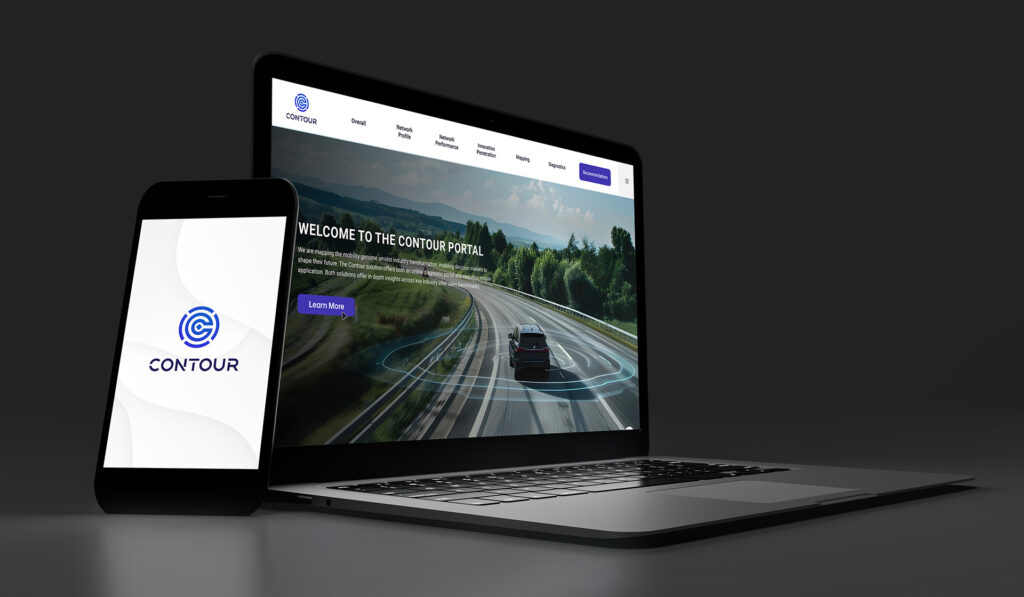
Traditional benchmarking relies on surveys, which often lack depth, accuracy, and relevance. Contour disrupts this model by integrating transactional data analytics, allowing businesses to compare industry trends. It works by aggregating repair order data and other relevant metrics which is then normalized and securely shared through an executive mobile app and diagnostic portal.

One of the unique aspects of this solution is its ability to normalize data across different OEMs and independent repair chains. This normalization allows for meaningful comparisons and helps organizations identify areas for improvement. This approach enables businesses to:

Delivering insights through smart technology

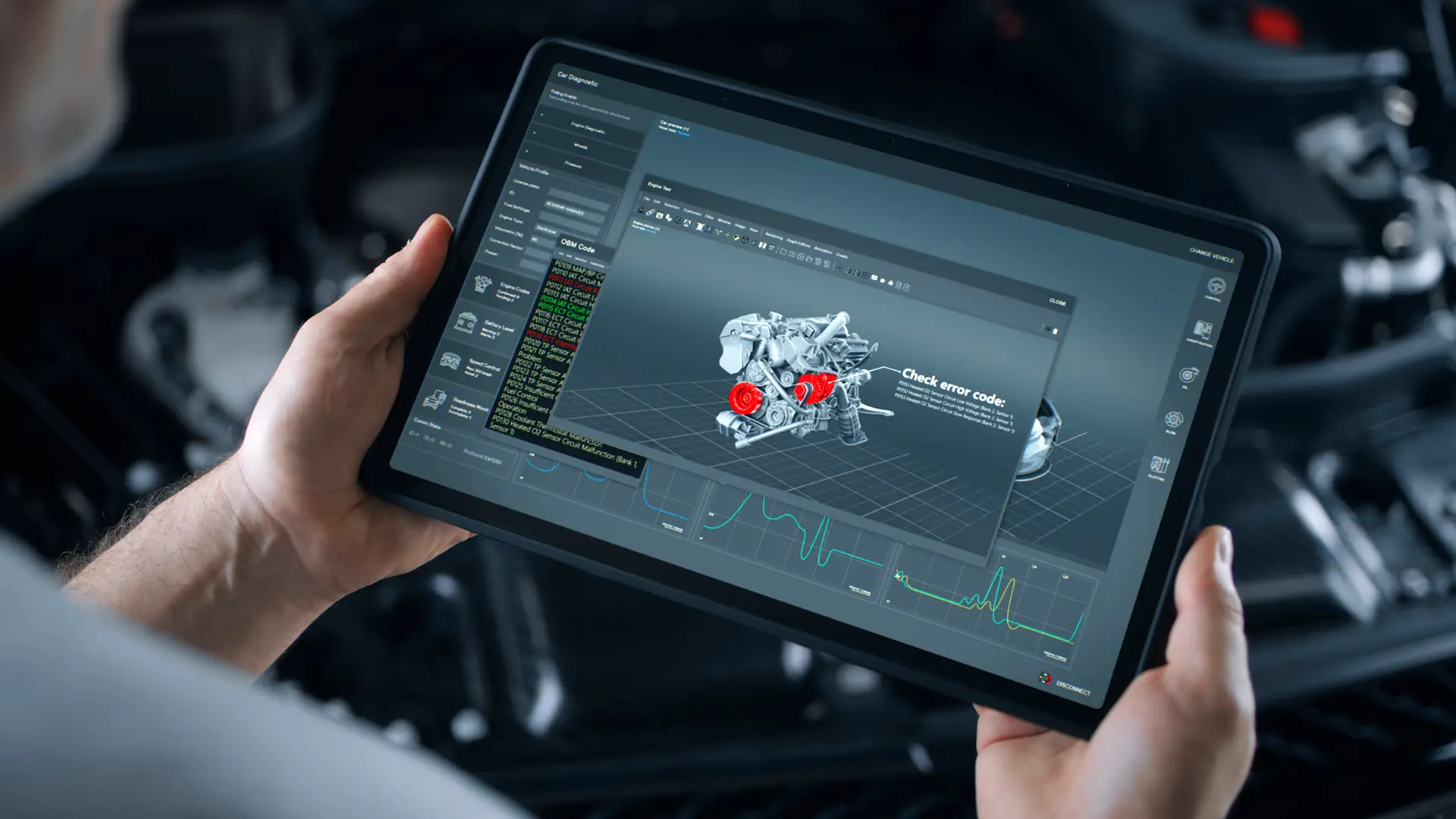
At the heart of Contour’s approach to benchmarking is the delivery of insights through smart technology, ensuring that these insights are both accessible and actionable by leveraging advanced technological solutions. Contour’s desktop Diagnostic Portal offers in-depth analysis with granular reports on brand performance and competitive analysis. This tool allows users to dive deep into the data, uncovering detailed insights that can drive strategic decisions and operational improvements.

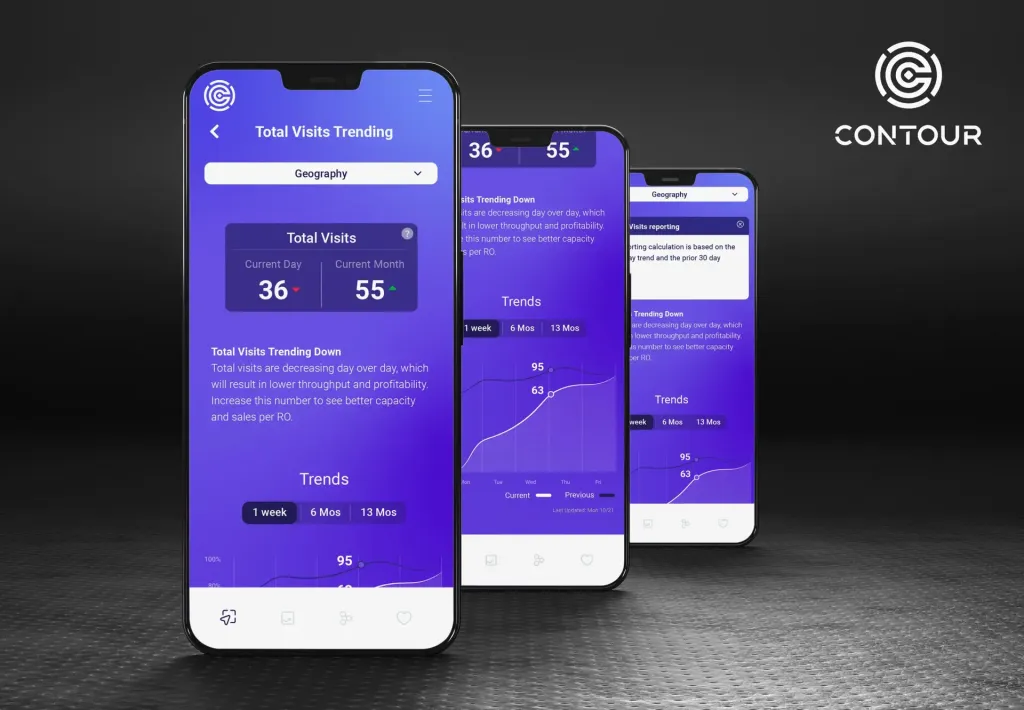
The Executive Mobile App provides a high-level, intuitive interface designed specifically for industry leaders who require quick, daily performance snapshots. This app is not only convenient, but it also empowers executives with the information they need to make informed decisions on the go. The app features AI-generated summaries and news aggregation, which enhance decision-making by providing a comprehensive view of the market landscape and highlighting key trends and developments.

Thought leadership and market intelligence

Looking ahead, Contour’s thought leadership initiatives aim to redefine benchmarking by integrating predictive business intelligence, AI-driven decision support, and globalized data trends. These modules are designed to not only anticipate market changes before they occur, allowing organizations to proactively adjust their strategies and operations, but also offer support to dealers and OEMs in identifying areas of concern and opportunity by analyzing vast amounts of data and providing actionable insights. Access to globalized data trends helps to expand competitive insights across international markets, enabling organizations to benchmark their performance on a global scale and stay ahead of industry trends.

Leading the evolution of benchmarking

The importance of the competitor benchmarking solution within Contour’s framework cannot be overstated. It not only helps organizations understand their position in the market but also provides actionable insights to drive improvements. By offering a comprehensive view of performance metrics, we’re enabling organizations to make informed decisions, optimize their operations, and ultimately achieve better business outcomes. By integrating predictive intelligence, smart indexing, and intuitive reporting, we’re empowering businesses to stay ahead of the competition and drive future success.

Contact us today to discover how Contour can transform your business and give you the competitive edge you need.

Contact the Author

Cory_Allen

Cory Allen

Global Delivery Leader, Actionable Insights

Cory_Allen

Cory Allen

Global Delivery Leader, Actionable Insights

Related Articles

Increasing fleet reliability: Real-world recommendations for preventative maintenance

Increasing fleet reliability: Real-world recommendations for preventative maintenance

Fast facts

Middle-mile logistics partner for a multinational e-commerce company

Faced with rising maintenance costs and inefficient scheduling as its vehicle warranties expired, our client needed a tailored preventative maintenance plan to reduce costs, extend vehicle lifespans, and improve reliability.

United States

MSX developed a data-driven risk modeling solution, using warranty data and survival analysis to create a preventative maintenance schedule. This approach aimed to reduce repair costs, extend vehicle lifespans, and improve reliability, potentially avoiding up to an additional $13 million in spend annually.

Addressing rising costs and inefficiency

The logistics partner for a multinational e-commerce company faced two key challenges as their fleet of vehicles approached the five-year mark – when warranties on many of their vehicles would expire:

  • Rising maintenance cost post-warranty

    During the first few years of vehicle ownership, our client’s costs were manageable, as major repairs were covered by manufacturer warranties. However, after four or five years, those warranties would no longer cover significant repairs, exposing them to potentially millions of dollars in additional maintenance expenses. With vehicles from several OEMs, they faced further complications. Maintenance and failure patterns varied across these OEMs, requiring tailored strategies for each.

  • Inefficient maintenance scheduling

    The existing maintenance schedule was insufficient for its needs. The schedule did not account for the rigorous demands placed on the fleet, leading to inefficiencies in downtime and suboptimal financial performance. In addition, our client lacked clear insights into the financial liabilities of extending vehicle lifespans and whether a more robust preventative maintenance program could mitigate risks and reduce costs.

In short, our logistics client needed a solution that could quantify the financial risk associated with maintaining its fleet post-warranty and propose a preventative maintenance plan that would extend vehicle lifespans, reduce downtime, and improve reliability, all while being cost-effective.

Insights for data-driven maintenance

We approached the client’s logistics team with a data-driven, advanced risk modeling solution that leveraged our expertise in the automotive sector and our ability to work with OEMs to obtain critical warranty data. The solution combined statistical techniques – specifically a reliability analysis – with practical recommendations for vehicle maintenance.

Step 1: Data collection

Our first step was to gather warranty data from the OEMs, which would allow us to understand the failure modes and maintenance requirements for each vehicle model in their fleet. We successfully negotiated with one OEM to provide warranty data not only for our client’s fleet vehicles but also for all similar model vehicles in its fleet, enriching our analysis. In the case of the second OEM, while direct data sharing wasn’t feasible, we leveraged a workaround by scraping the warranty data from its online vehicle information site, which allowed us to obtain the necessary details for its vehicles.

Step 2: Risk modeling

Using the warranty and maintenance data, we created a reliability model for each major vehicle component - such as the transmission, drivetrain, and electrical systems. We employed survival analysis to model the risk of failure for each component over time, allowing us to quantify the probability of failures at various mileage points. This modeling enabled us to predict how the risk of failure would evolve as vehicles aged, particularly after the expiration of their warranties.

Step 3: Preventative maintenance strategy

Once we had a clear understanding of the risks associated with each vehicle and component, we moved on to crafting a detailed preventative maintenance schedule. This schedule was designed to reduce the likelihood of costly, unplanned repairs by performing timely, cost-effective maintenance activities before failures occurred. Our approach considered the maintenance needs of 12-15 critical vehicle components for each OEM, proposing specific interventions (such as replacing batteries or servicing drivetrains) at optimized intervals.

Step 4: Financial analysis and impact simulation

Using the preventative maintenance schedule, we ran simulations to estimate the financial impact of the proposed activities. The goal was to quantify how much our client could save in terms of reduced downtime and repair costs. For example, we found that by implementing our preventative maintenance strategy for the drivetrain and transmission systems, they could avoid up to an additional $13 million in spend annually.

The key to our solution was that it not only helped our client optimize maintenance costs but also allowed the organization to plan for parts and services more effectively. By reducing unplanned downtime and minimizing the need for emergency repairs, it could maintain fleet reliability while cutting costs.

Benefits of a preventative maintenance model

While the full preventative maintenance strategy has not yet been implemented across the client’s entire fleet, the results from our model have already provided significant insights:

  • Cost savings

    By following our recommendations, the company could avoid up to an estimated $13 million in spend annually just by reducing the frequency and cost of major repairs in critical vehicle components.

  • Financial risk mitigation

    Our calculations indicated that without preventative measures, our client would face a 227% increase in repair costs once warranties expired. While this increase cannot be substantially reduced, our focus is on making this out-of-warranty jump as small as possible. Our preventative maintenance schedule provided a clear path to reducing these future liabilities.

  • Improved reliability

    The reliability modeling showed that implementing our maintenance schedule would significantly improve vehicle reliability, leading to less downtime and more efficient operations.

The foundation for long-term savings

As the program continues to evolve, MSX is exploring automation and AI to further streamline rule-based entries and validations. Early estimates suggest that these innovations could significantly reduce workloads for high-volume, low-complexity claims, freeing up dealer teams to focus on higher-value activities and further improving cycle times.

This project exemplifies the power of data-driven decision-making in fleet management. By combining advanced risk modeling and preventative maintenance strategies, we provided this organization with the tools to optimize its fleet maintenance, reduce operational costs, and enhance vehicle reliability. Although the full operational results are yet to be realized, the financial and strategic framework we’ve put in place gives the business a clear path to achieving long-term savings and efficiency gains.

Related case studies

Is the traditional KPI dead? The future of performance management in a data-driven era

Is the traditional KPI dead? The future of performance management in a data-driven era

In the automotive industry, Key Performance Indicators (KPIs) have long been used as essential tools in measuring success. They offer a clear, albeit limited historical view of a company’s performance. However, as the industry evolves and embraces digital transformation, and data becomes more abundant, is relying solely on retrospective metrics enough to remain competitive? 

Forward-looking analytics, real-time data integration, and predictive models are becoming increasingly critical. These tools can provide deeper insights into customer behavior, market trends, and operational efficiencies, enabling companies to not just track past performance, but also anticipate future challenges and opportunities, thereby driving proactive decision-making and innovation.

Revolutionizing performance measurement

Traditional KPIs tend to be reactive, providing information on what occurred without delving into the reasons behind it or suggesting preventive measures. In a data-driven world, predictive and prescriptive models can help transform how performance is measured and managed. By leveraging data to forecast future outcomes and suggest actions, OEMs can increase the complexity of their business decisions, enhancing their predictive and prescriptive capabilities. Unlike KPIs, which provide a static view of past performance, predictive models use advanced algorithms and machine learning to analyze vast amounts of data, uncovering patterns and correlations that might not be immediately obvious.

This shift from reactive to proactive analytics is crucial for staying competitive in a fast-paced industry. Let’s look at a few examples of how this approach can transform operations, reducing costs, enhancing efficiency and improving satisfaction.

The power of combined expertise

Successfully implementing predictive models in the automotive industry requires a deep understanding of automotive systems, processes, and customer behaviors. Combining data science with automotive expertise ensures that models are accurate and actionable, providing real-world value.

While a data scientist might develop a robust predictive model, an automotive expert can provide the necessary context to interpret the results and apply them effectively. This collaboration bridges the gap between theoretical insights and practical application, ensuring that predictive models deliver tangible benefits.

Automotive experts can refine predictive model recommendations by considering specific operating conditions and practical constraints. This combined expertise ensures that the predictive model’s insights are practical and actionable.

Adapting KPIs for the future

The question isn’t whether KPIs are needed anymore, but how they can evolve to stay relevant. In this rapidly changing industry, leveraging live, constantly evolving data for proactive decision-making is essential. Retail networks require dynamic and comprehensive solutions that harness this real-time data, providing insights that drive continuous improvement and sustainable growth. By adopting these models, manufacturers and mobility players can optimize operations, enhance customer experiences, and gain a competitive edge. KPIs are not dead—they’re becoming part of a more sophisticated approach to measuring and driving success.

Integrating predictive models and advanced analytics is the next frontier in performance measurement. Those who adapt and utilize the power of live data will be the ones who thrive.

Contact the Author

Felipe_Cruz

Felipe Cruz

 Global Solutions Leader, Actionable Insights

Contact the Author

Felipe_Cruz

Felipe Cruz


Global Solutions Leader, Actionable Insights

Related Articles